


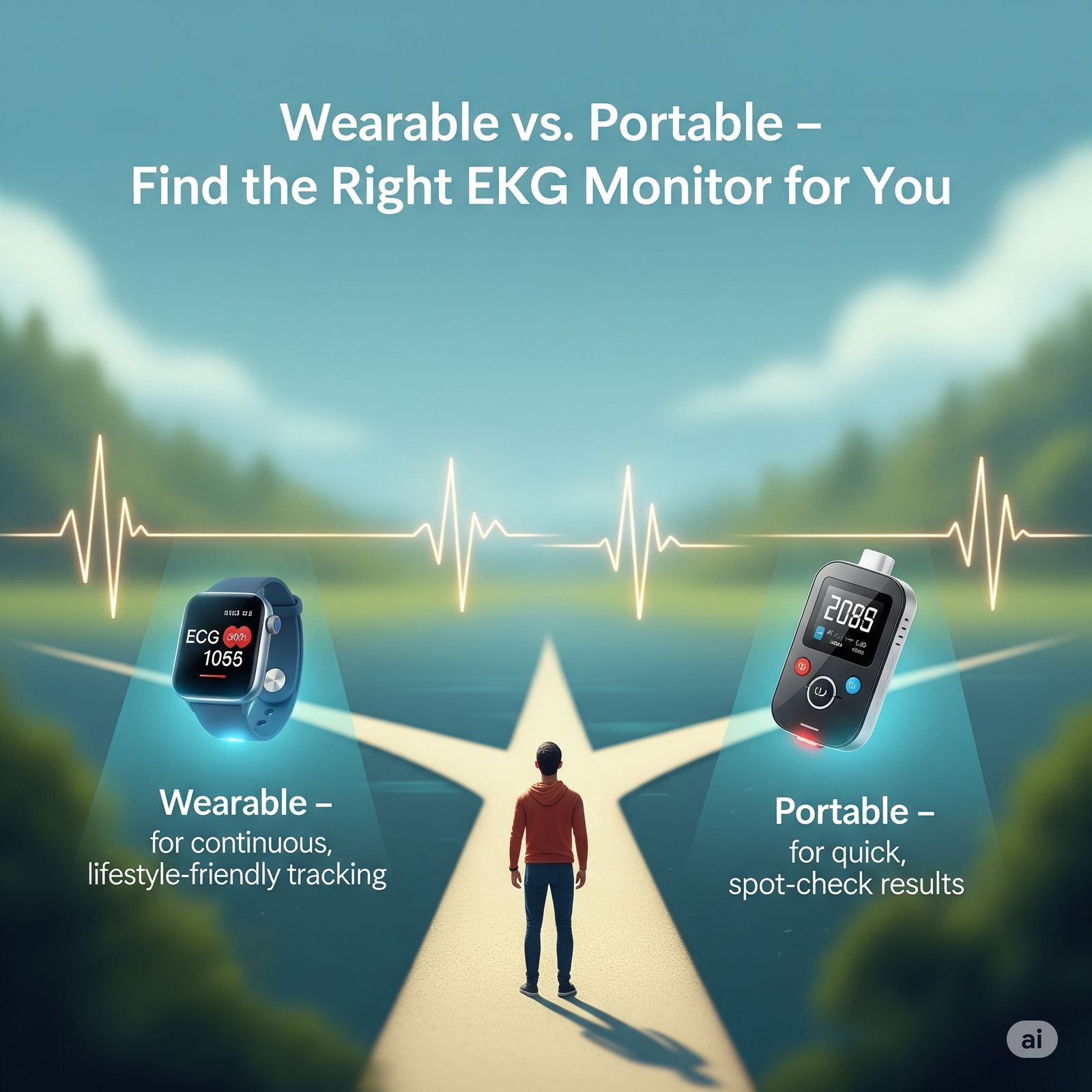
Your heart tells a story every second, beats rising in excitement, slowing in rest, fluttering in stress. But what if you could listen in on that story anytime, anywhere? That’s exactly what an ECG/EKG Monitor allows you to do. In a world where health technology is getting smarter and smaller, monitoring your heart no longer requires a visit to the clinic.
Now, you can choose between two powerful companions: wearable devices on your wrist or a powerful portable device in your pocket, monitoring your heart is now in your hands. But which one is right for you? Let’s break it down and find out.
Understanding the Basics of ECG/EKG Monitoring
Prior to get into depth of wearable vs. portable monitors, it’s helpful to understand what an ECG/EKG Monitor actually does. These devices record the electrical activity of your heart and help detect irregularities like arrhythmias, heart disease, or even early warning signs of a heart attack.
In the past, this type of monitoring was restricted to clinical settings. Today, however, everyday users can choose between compact wearable ecg ekg tools or portable devices to manage their heart health at home or on the go. Let’s start by exploring wearable monitors.
What Are Wearable ECG/EKG Monitors?
- Manufacturers designed a wearable ECG/EKG monitor for continuous use. They are in the form of smartwatches, chest straps, or fitness trackers. These devices feature designs prioritizing comfort and convenience. Their major advantage is that they keep working throughout your day, whether you’re exercising, sleeping, or working.
- They offer real-time heart data and sync easily with mobile apps. Some even track additional health stats like sleep quality, stress, and oxygen levels. If you like to keep track of your health without doing much effort, you’ll like how they watch your heart automatically.
- While wearable monitors are great for constant feedback. They may not always provide the deep diagnostic details. For that, many people turn to portable ecg ekg monitors. Let’s look at what they offer.
What Are Portable ECG/EKG Devices?
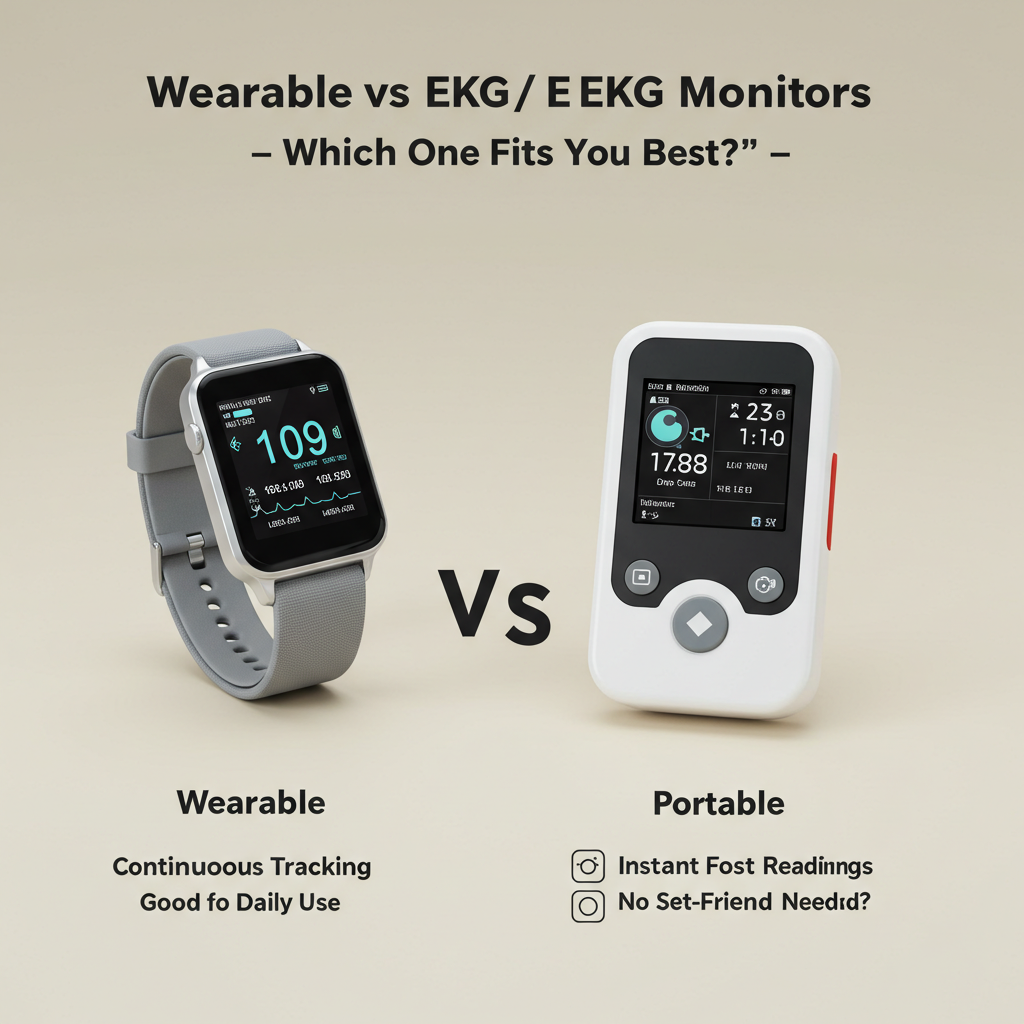
- One cannot wear portable ECG/EKG monitor all day. Instead, they’re handheld and used on demand—when symptoms like palpitations or chest pain occur. These compact tools are perfect for quick check-ins and detailed spot readings.
- To use one, you usually place your fingers on electrodes or press the device against your chest. The monitor gives quick results, which we can save or share with a healthcare provider. These medical devices offer excellent precision, especially when symptoms strike.
- Although not designed for round-the-clock tracking, an ECG/EKG Monitor in portable form is invaluable for high-risk patients who need reliable, snapshot-style readings. Now that we’ve covered the basics of both types, it’s time to weigh their pros and cons.
Pros and Cons: Wearable vs. Portable Monitors
Each type of device has its strengths and trade-offs. Understanding these can help you choose based on your lifestyle and medical needs.
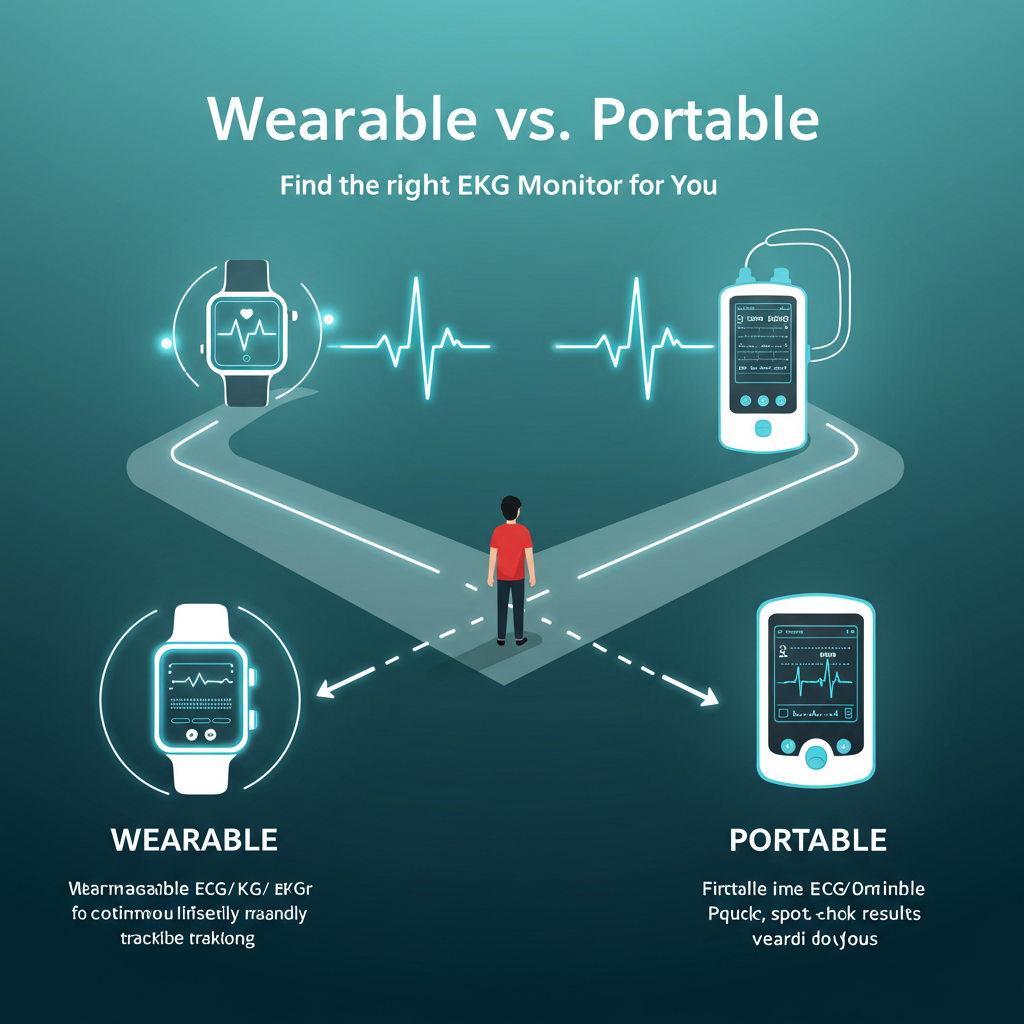
Wearable ECG/EKG Machines offer continuous monitoring, making them ideal for everyday use and fitness tracking.
- Advantages: They run in the background and alert you if anything abnormal happens. Integration with smartphone apps makes tracking seamless. They also double as wellness tools, monitoring things like sleep and activity.
- Disadvantages: Battery life can be an issue because of constant use. Also, while convenient, they may not provide clinical-level precision
Portable ECG/EKG Machines provide focused, medical-grade results during specific episodes.
- Advantages: Known for their accuracy, they often come with advanced features like multi-lead readings. Great for capturing events as they happen and sharing data with your doctor.
- Disadvantages: You must use them actively when symptoms occur. They might miss irregularities that appear without warning.
Knowing these pros and cons of using ECG/EKG Monitor, let’s talk about who benefits most from each type.
When to Use Wearable vs. Portable ECG/EKG Monitor
The right choice depends on how closely you want to monitor your heart and why.
Choose a wearable ecg monitor if you:
- Are interested in wellness tracking alongside heart monitoring
- Want round-the-clock data without manual input
- Lead an active lifestyle or want to track fitness recovery
Choose a portable ecg monitor if you:
- Have been diagnosed with a heart condition
- Experience symptoms like dizziness, irregular heartbeat, or chest pain
- Need accurate readings to share with your doctor
With a clear understanding of your needs, let’s explore the technology that powers these devices.
Technology and Features Breakdown
The features built into each ECG/EKG Monitor can drastically affect how useful it is for you.
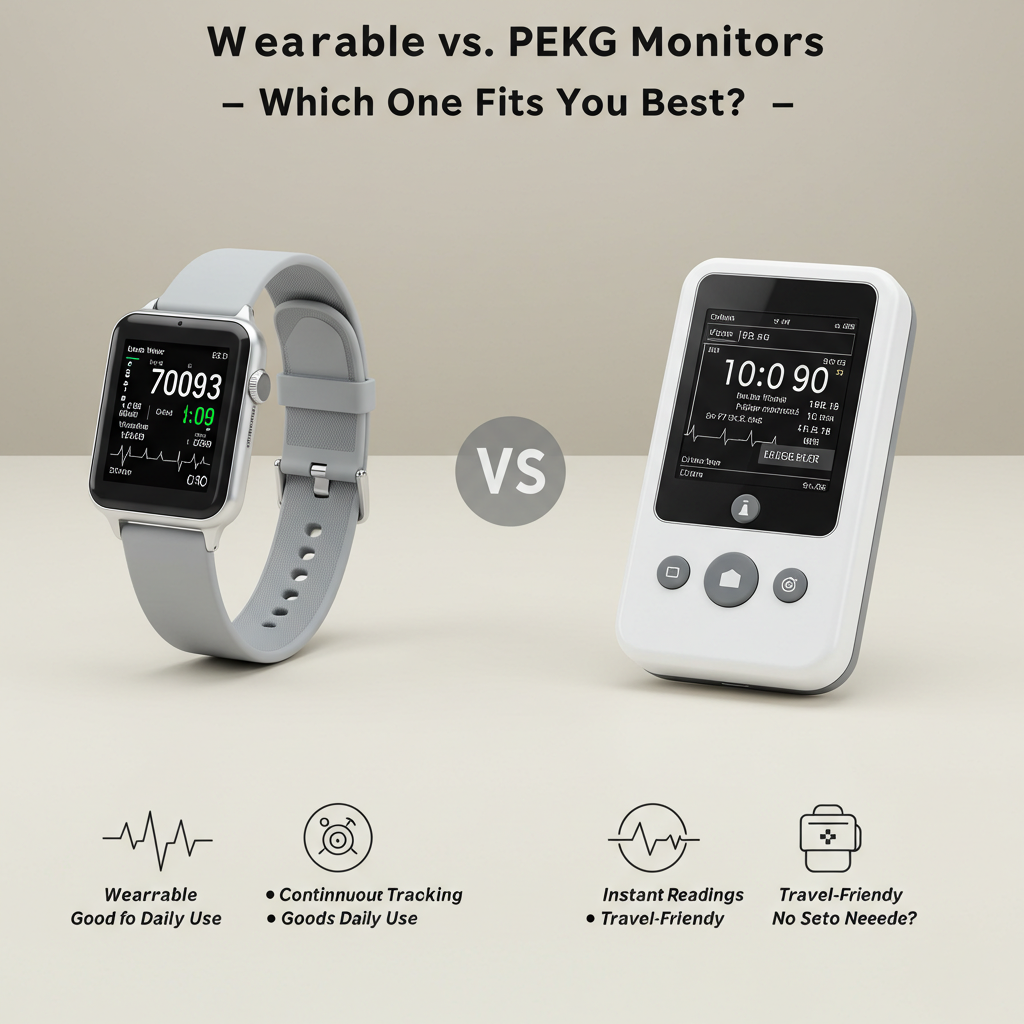
Wearable Monitors usually connect via Bluetooth or Wi-Fi to apps that store and analyze your heart data. Some offer access to telehealth services as well.
- Track your heart rate, sleep, stress, and oxygen saturation
- The system instantly alerts you if it detects anything unusual.
- Easy access to reports you can share with healthcare professionals
Choose a portable ecg monitor if you:
- Offer multi-lead readings and deeper insights
- Display results without a phone
- Save multiple sessions and allow you to analyze your data later
Whether you value daily feedback or precision during key moments, tech specs matter. Now let’s consider your budget and how much upkeep each option requires.
Having personal EKG monitors built into a device that many people already wear makes it very easy to use. The Apple Watch can also check your heart rhythm in the background and let you know if something seems off. Let’s now look at a device that does more advanced analysis.
Cost and Maintenance Considerations
The price and care needs of your monitor can influence your decision, especially for long-term use.
- Wearable cardiac monitor: typically costs between $150 and $400. Many include health and fitness tracking features, with optional paid app subscriptions. They’re low-maintenance. You just need to keep them charged and updated.
- Portable cardiac monitor: Psually ranges from $200 to $60 These devices are more diagnostic and may qualify for insurance reimbursement. You’ll need to replace batteries or recalibrate them occasionally.
Cost shouldn’t be the only factor, but it’s important to consider how the device fits into your health routine. To help you compare easily, here’s a side-by-side overview.
Comparison Chart: Wearable vs. Portable ECG/EKG Monitors
| Feature | Wearable Monitors | Portable Monitors |
| Monitoring Type | Continuous tracking throughout the day | On-demand recording based on symptoms |
| Ease of Use | Highly user-friendly, no manual input needed | Moderate—requires action during symptoms |
| Accuracy | Moderate to high (varies by brand) | High (often clinical-grade) |
| Portability | Extremely portable—worn on the body | Compact—fits in pocket or bag |
| Battery Life | Needs regular charging | Long-lasting or replaceable batteries |
| Data Sharing | Seamless app integration and cloud sync | Manual or USB data transfer |
| Price Range | $150–$400 | $200–$600 |
| Best Suited For | Lifestyle tracking and early detection | Clinical use and symptom-triggered diagnostics |
With everything laid out, you can easily decide which type of monitor suits your goals. Let’s wrap it up!
Making the Right Choice for Your Heart Health
Choosing the right ECG/EKG Monitor means thinking about your health, lifestyle, and how involved you want to be in daily tracking. Here are a few questions to guide you:
- Do I want ongoing feedback, or only when symptoms appear?
- Will I use the data with health apps or just for doctor check-ins?
- Has my doctor recommended a specific type or feature?
If you’re focused on fitness and lifestyle tracking, a wearable ecg or wearable ekg might be just what you need. If you’re managing a condition or want clinical accuracy, a portable monitor is likely your best bet.
Your heart works hard every second. Now, it’s time to support it the right way. Choosing the best ECG/EKG Monitor isn’t just about features or price; it’s about taking charge of your health and well-being.
Wearables offer convenience, daily insights, and a proactive way to stay informed. Portables deliver accuracy, reliability, and peace of mind when it matters most. Choose what fits your life—and take control of your heart health before problems arise.
Make your heart a priority. Explore which ECG/EKG device fits your lifestyle best.