


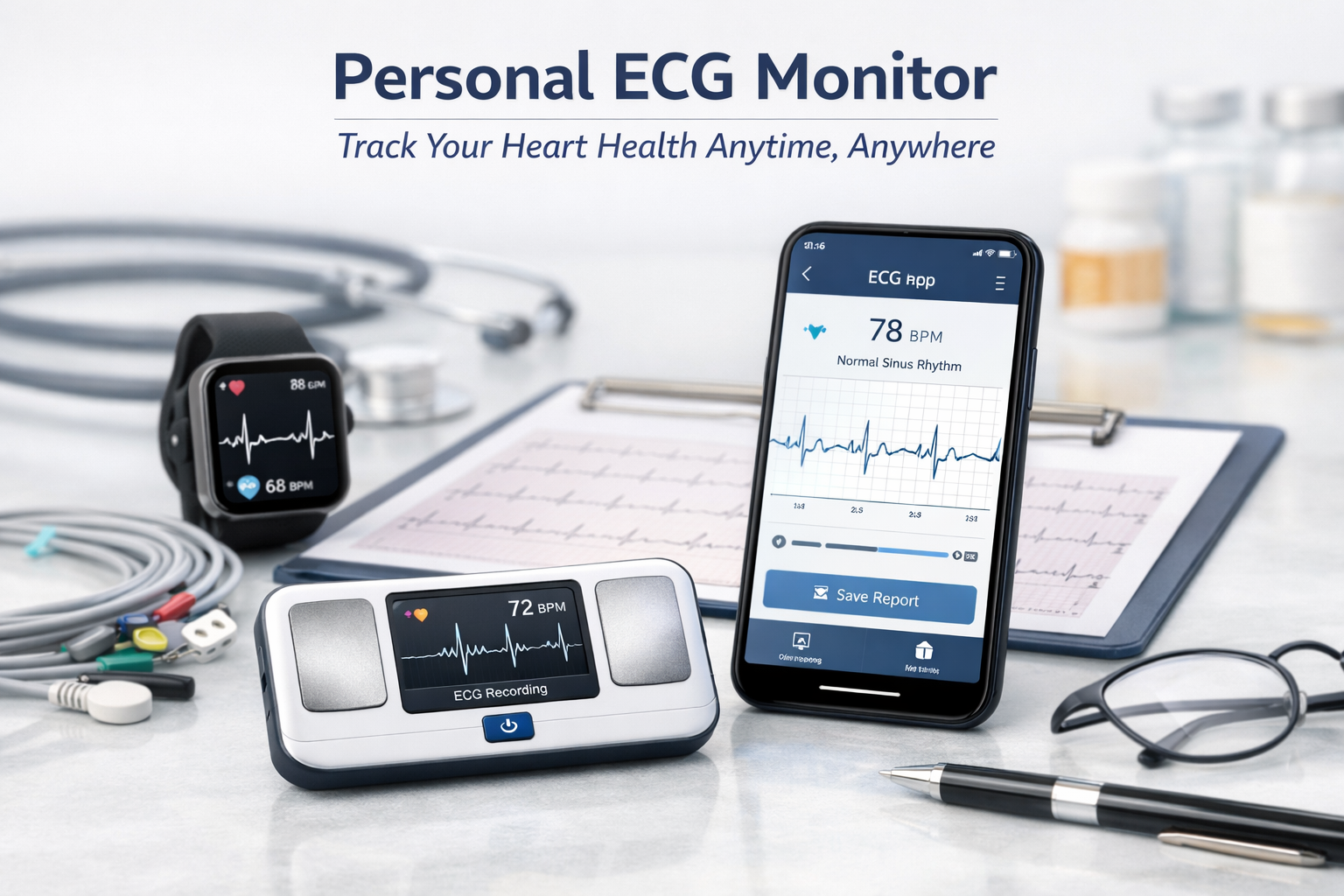
In today’s world, health technology is no longer limited to hospitals and clinics. From smartwatches to digital thermometers, people are taking a more active role in understanding their bodies. One of the most powerful tools to emerge in recent years is the personal ECG monitor—a compact, user-friendly device that allows individuals to record and observe their heart’s electrical activity anytime, anywhere.
Heart health is no longer something you check only during an annual visit. With rising awareness around stress, lifestyle diseases, and silent heart conditions, more people want reliable ways to stay informed. This is exactly where a personal ECG monitor fits in. It bridges the gap between professional medical testing and everyday wellness tracking, giving users deeper insights than a basic fitness tracker ever could.
This guide explores what a personal ECG monitor is, how it works, why it matters, and how it is changing the future of home-based heart care.
Understanding What a Personal ECG Monitor Really Is
An ECG, or electrocardiogram, records the electrical signals that control your heartbeat. Traditionally, this test was performed in hospitals using bulky machines connected with multiple wires. Today, the same fundamental science is available in compact, portable formats designed for everyday use.
A personal ECG monitor is a small electronic device designed to measure and record heart rhythms outside of clinical settings. Instead of waiting for symptoms to become serious, users can track changes as they happen, creating a more proactive approach to cardiovascular health.
These monitors are designed for simplicity. Most models use fingertip sensors, small electrode pads, or wearable designs that connect to a smartphone. Within seconds, users can see heart rhythm data displayed on an app, often with visual waveforms and instant analysis.
Unlike general pulse trackers, these devices focus on the electrical activity of the heart, making them far more precise and medically relevant.
Why At-Home Heart Monitoring Has Become So Important
Modern lifestyles are often fast, stressful, and sedentary. Long working hours, irregular sleep, high caffeine intake, and constant screen exposure all place extra demands on the heart. At the same time, many heart rhythm issues show little to no obvious symptoms in early stages.
This is why tools like an EKG monitor at home have gained popularity. They empower people to:
• Observe irregular heart rhythms early
• Monitor how stress and exercise affect the heart
• Support doctor visits with real data
• Build consistent awareness of heart patterns
Instead of relying solely on occasional checkups, users can collect meaningful insights over weeks or months. This long-term view is something even a short hospital ECG cannot always provide.
How a Personal ECG Monitor Works
At its core, the technology is based on electrodes that detect the tiny electrical impulses generated by heart muscle contractions. When you place your fingers on the sensors or wear the device, it measures how these impulses travel through the heart.
The device then converts these signals into waveforms that represent each heartbeat cycle. Most modern monitors sync with smartphone apps that display the data, store recordings, and in some cases, use algorithms to flag unusual patterns.
Many personal ECG monitors now include cloud storage, allowing reports to be shared with healthcare professionals remotely. This has transformed how follow-ups and preventative consultations are done, making heart health monitoring far more continuous and accessible.
The Rise of Portable ECG Technology
The shift from hospital machines to compact devices has been driven by advancements in sensor design, battery life, and mobile computing. A portable EKG machine today can fit in a pocket yet perform highly detailed recordings that were once only possible in clinical environments.
Some devices are designed for quick spot checks, while others are built for longer-term wearable use. Even compact versions of a Portable 12-lead ECG Machine now exist, primarily aimed at medical professionals and advanced users who require deeper diagnostic detail.
What makes these tools so impactful is their ability to combine portability with precision. They don’t replace doctors, but they significantly improve how data is collected between visits.
Wearables vs Dedicated ECG Devices
With the rise of smartwatches, many people wonder whether a wearable is enough. A wearable ECG monitor integrated into a watch can be useful for general awareness and convenience. It often works passively, capturing data during daily activities.
However, a dedicated personal ECG monitor device is usually built with higher medical focus. It often provides clearer signals, more consistent readings, and better options for sharing full reports with physicians.
There is also increasing interest in the comparison of personal ECG monitor vs smartwatch ECG solutions. While smartwatches are excellent lifestyle tools, standalone monitors often deliver more specialized cardiac insights, especially for people who want focused tracking rather than multi-purpose features.
Who Can Benefit Most From a Personal ECG Monitor
These devices are not limited to people with diagnosed heart conditions. They are useful across a wide spectrum of users.
Individuals managing stress, fitness enthusiasts optimizing training loads, older adults wanting peace of mind, and people with family histories of heart disease can all benefit.
Those dealing with palpitations, fatigue, or unexplained dizziness often find reassurance in being able to record what their heart is doing during those moments. For others, the benefit is preventative—spotting subtle changes long before symptoms become serious.
Some users look specifically for a personal ECG monitor for arrhythmia tracking, allowing them to log irregular heartbeats and discuss patterns with their healthcare provider.
The Role of Data in Preventive Heart Care
One of the biggest advantages of modern monitoring tools is the data they generate. Instead of relying on memory or short-term tests, users can build personal heart profiles.
Over time, patterns become visible: resting rhythms, exercise recovery rates, stress-related changes, and sleep-associated variations. This information helps both users and doctors make more informed decisions.
With consistent use, a personal electrocardiogram monitor can support:
• Lifestyle changes
• Medication assessments
• Training adjustments
• Early warnings for irregular rhythms
This long-term perspective is where these devices truly shine.
Accuracy, Safety, and Regulatory Trust
When dealing with heart health, accuracy is non-negotiable. Many top devices undergo strict regulatory review, and users often look for an FDA approved personal ECG monitor to ensure reliability and safety.
While not every product requires the same level of certification, regulatory approval generally means the device has been tested for measurement accuracy, electrical safety, and data handling standards.
Choosing a trusted product is essential, especially if the device will be used to inform medical discussions.
Integrating Monitoring Into Daily Life
One of the biggest reasons these devices have grown in popularity is how seamlessly they fit into everyday routines. Using a portable personal ECG monitor no longer feels like a medical procedure. It can be part of a morning wellness check, a post-workout review, or a moment of reassurance during stressful days.
Most devices are designed for comfort and ease. Recordings can take less than a minute, yet provide meaningful insight. Over time, this routine encourages better health awareness and fosters a deeper connection between users and their bodies.
Home Monitoring and Remote Healthcare
The healthcare industry is shifting toward more remote, data-driven models. Home-based tools are playing a major role in this transformation. A home ECG monitoring device supports telemedicine by giving doctors access to accurate heart rhythm records without requiring physical appointments for every concern.
Patients can send reports digitally, track progress between visits, and receive feedback without delays. This not only improves convenience but also enhances the quality of care by providing real-world data instead of isolated clinical snapshots.
Innovation in Portable Cardiac Devices
The evolution of ECG technology continues rapidly. Modern devices are becoming lighter, smarter, and more connected. Artificial intelligence is increasingly used to analyze readings, highlight irregularities, and even predict potential risks based on long-term trends.
Battery life has improved, signal processing is more refined, and apps are more intuitive. These advances have turned what was once hospital-only equipment into accessible wellness technology.
Even professional-grade tools such as an EKG monitoring device now exist in compact formats, enabling clinicians, trainers, and researchers to collect high-quality cardiac data outside traditional settings.
Choosing the Right Personal ECG Monitor
While the market offers many options, the best device is the one that matches the user’s needs. Some prioritize simplicity, others want deeper data. Some users want wearable designs, while others prefer handheld units.
Many consumers look for the best personal ECG monitor based on accuracy, ease of use, app quality, and regulatory approval. The ideal choice balances medical reliability with everyday practicality.
It’s also important to remember that these devices are tools, not diagnoses. They support awareness and discussion, not self-treatment.
The Psychological Impact of Heart Monitoring
Beyond physical data, these devices often influence how people feel about their health. For some, monitoring reduces anxiety by offering reassurance. For others, it builds motivation to adopt healthier routines.
Seeing heart patterns change in response to exercise, relaxation, or better sleep reinforces positive habits. This emotional engagement is one of the overlooked but powerful benefits of personal monitoring technology.
The Future of Personal Heart Health Technology
The future points toward even more personalized systems. Integration with blood pressure, oxygen saturation, glucose tracking, and sleep analysis will likely become standard. The goal is not isolated metrics, but complete cardiovascular profiles.
We can expect smarter algorithms, better predictive models, and closer collaboration between consumer devices and healthcare systems. As technology advances, the personal ECG monitor will become not just a recorder, but an intelligent companion for long-term heart wellness.
Final Thoughts
Heart health is no longer something that happens only in clinics. It is becoming a daily, informed practice supported by intelligent tools. A personal ECG monitor represents one of the most meaningful steps forward in this movement.
By making cardiac data accessible, understandable, and shareable, these devices empower individuals to take a more active role in their well-being. They don’t replace doctors—but they strengthen the connection between everyday life and professional care.
In a world where prevention matters more than ever, personal heart monitoring stands as a powerful ally in building healthier, more informed lifestyles.