


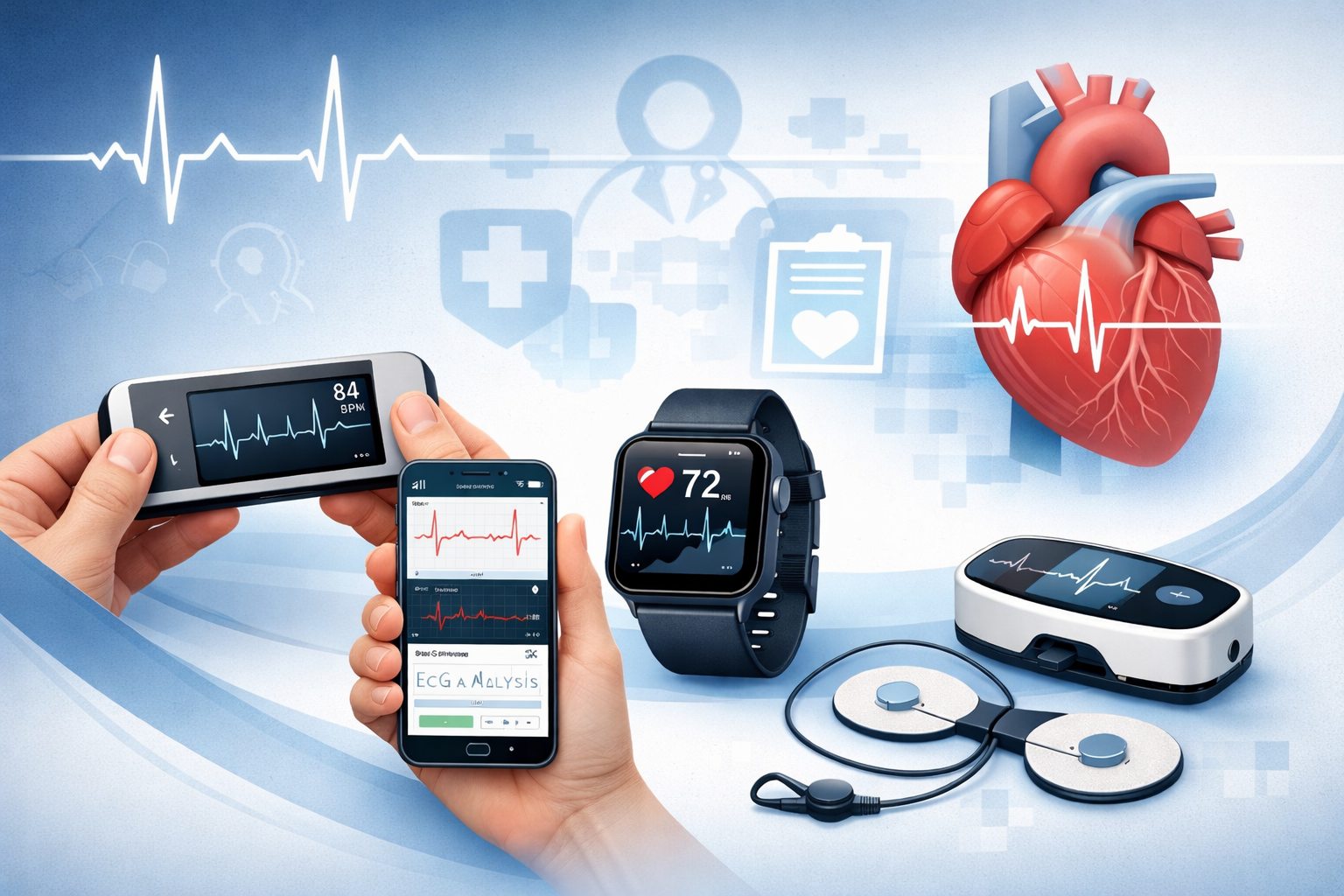
Heart health is no longer something people think about only after a problem arises. In today’s world, where stress levels are high and lifestyles are fast-paced, individuals are becoming far more proactive about monitoring their cardiovascular well-being. Technology has played a crucial role in this shift, especially with the rise of advanced personal health devices designed for everyday use.
One of the most impactful innovations in this space is the Personal EKG monitor. What was once bulky hospital equipment has now evolved into compact, intelligent devices that allow individuals to track heart activity from the comfort of their own homes. These tools are helping people better understand their heart rhythm, recognize irregularities earlier, and have more informed conversations with healthcare professionals.
This article explores how personal heart monitoring works, why it matters, and how a Personal EKG monitor is changing the future of at-home cardiac care.
The Growing Importance of Personal Heart Monitoring
Cardiovascular disease remains one of the leading health concerns worldwide. While medical advancements have improved treatment options, prevention and early detection remain the most effective strategies for reducing risk. This is where personal monitoring technology has gained widespread attention.
A personal EKG monitor gives individuals the ability to observe their heart’s electrical activity outside of a clinical environment. Instead of relying solely on occasional doctor visits, users can collect data over time, providing a more complete picture of their heart health.
This shift toward self-monitoring aligns with the broader movement toward personalized healthcare, where individuals play an active role in managing their well-being rather than reacting to symptoms after they occur.
What Is a Personal EKG Monitor?
A personal EKG monitor is a compact electronic device designed to record and analyze the heart’s electrical signals. These signals control how the heart beats, and changes in their pattern can indicate potential rhythm issues.
Unlike traditional electrocardiogram machines found in hospitals, personal devices are built for convenience and ease of use. Many models require only a few seconds to capture a reading and display results through a connected smartphone app.
Although a Personal EKG monitor does not replace professional diagnostic tools, it provides valuable screening data that can help users and doctors identify potential concerns earlier than would otherwise be possible.
How EKG Technology Works in Simple Terms
Every heartbeat is triggered by an electrical impulse. An EKG records these impulses and displays them as a waveform, showing how fast and how regularly the heart is beating.
Modern personal devices use highly sensitive sensors to detect these electrical signals through the skin. Thanks to advancements in digital processing, even small, portable devices can now deliver accurate and consistent readings suitable for everyday monitoring.
This technology has made it possible for a personal EKG monitor to deliver meaningful insights without requiring specialized training or clinical supervision.
Why People Are Choosing At-Home Monitoring
One of the biggest advantages of personal monitoring is accessibility. A home EKG monitor allows individuals to check their heart rhythm without scheduling appointments or visiting medical facilities.
People choose at-home monitoring for several reasons:
-
Convenience and time savings
-
Ongoing tracking instead of one-time tests
-
Reduced anxiety between doctor visits
-
Better understanding of personal health trends
An At-Home ECG Device fits naturally into daily life, empowering users to take a more active role in managing their cardiovascular health.
Who Benefits Most From a Personal EKG Monitor?
While nearly anyone can benefit from heart monitoring, certain groups find these devices especially valuable.
People With Heart Rhythm Concerns
Individuals who experience palpitations, irregular heartbeats, or have a history of arrhythmias often use a Personal EKG Monitor to track changes and provide detailed records to their healthcare providers.
Aging Adults
As people age, the risk of heart rhythm irregularities increases. Regular monitoring can offer reassurance and early warnings.
Health-Conscious Individuals
Fitness enthusiasts and wellness-focused users often rely on heart rate and rhythm tracker tools to understand how exercise, stress, and recovery affect their heart.
Busy Professionals
For those with limited time, personal monitoring offers peace of mind without disrupting work or travel schedules.
Portability and Everyday Use
Modern devices are designed for mobility. A portable EKG monitor is small, lightweight, and easy to carry, making it practical for use at home, at work, or while traveling.
This portability ensures that users can capture readings whenever symptoms occur, rather than waiting for a scheduled test. That real-time data can be invaluable for identifying patterns or triggers that might otherwise go unnoticed.
Portability is one of the key reasons the Personal EKG Monitor has become such a popular choice for long-term heart monitoring.
Wearable Technology and Continuous Tracking
Wearable health technology has transformed how people interact with medical data. A Wearable EKG Device integrates monitoring into everyday accessories, such as wristbands or patches, enabling more consistent data collection.
Wearables reduce the need for manual measurements and allow users to build a long-term record of heart activity. Over time, this continuous data can reveal trends that short-term tests may miss.
As part of the broader category of cardiac health devices, wearables represent a major step forward in making heart monitoring seamless and unobtrusive.
Smart Features and Digital Integration
A modern smart EKG monitor goes beyond basic data collection. Many devices now include intelligent software capable of detecting irregular patterns and organizing data into easy-to-understand summaries, integrating seamlessly with mobile ECG devices for comprehensive heart tracking.
With mobile integration, users can:
-
View results instantly
-
Track changes over weeks or months
-
Store records securely
-
Share data with healthcare professionals
These smart features transform raw heart data into actionable insights, making a Personal EKG monitor far more useful than older, standalone devices.
Accuracy, Safety, and Medical Standards
Accuracy is essential when dealing with heart health. Many users prefer an FDA-approved EKG monitor because regulatory approval indicates that the device has been tested for safety and performance.
While not every personal monitor carries official approval, those that do often provide higher confidence in their readings. It’s important to remember that personal devices are intended for monitoring and screening, not for making final medical diagnoses.
Responsible use of a Personal EKG monitor means understanding its role as a supportive tool rather than a replacement for professional care.
Wireless Connectivity and Data Sharing
A Wireless EKG monitor eliminates cables and manual uploads, making heart monitoring more convenient and user-friendly. Data syncs automatically with mobile apps, ensuring that readings are stored and accessible at any time.
This wireless functionality also simplifies communication with healthcare providers. Instead of describing symptoms from memory, users can share actual data collected during daily life.
Wireless connectivity is a key reason personal monitoring has become so widely adopted in recent years.
Supporting Preventive Healthcare
Preventive care is one of the most important benefits of personal monitoring. A reliable Heart Rhythm monitor helps identify subtle changes before they develop into more serious problems.
By using a Personal EKG Monitor regularly, individuals can become more aware of how lifestyle factors—such as stress, sleep, and physical activity—affect their heart health. This awareness often leads to healthier habits and earlier medical consultations when needed.
Choosing the Right Device for Your Needs
Not all personal monitors are the same. Selecting the right device depends on factors such as ease of use, accuracy, connectivity, and personal health goals.
Some users prefer simple devices focused on quick readings, while others want advanced features and long-term data analysis. A well-chosen ECG monitor for Home Use should fit seamlessly into daily routines without adding complexity.
Understanding your needs ensures that your Personal EKG monitor becomes a helpful tool rather than an unused gadget.
The Role of Mobile ECG Devices in Modern Healthcare
Mobile ECG devices have expanded the reach of heart monitoring beyond traditional settings. By combining portability with digital intelligence, these devices support a more flexible and responsive healthcare experience.
Doctors increasingly value patient-generated data, as it provides insight into real-world conditions rather than isolated clinical snapshots. When used correctly, mobile monitoring strengthens the partnership between patients and healthcare professionals.
Limitations and Responsible Expectations
While personal monitoring offers many advantages, it’s important to maintain realistic expectations. A Personal EKG Monitor cannot diagnose complex heart conditions or replace medical testing.
Users should avoid self-diagnosis and always consult healthcare professionals when readings indicate irregularities or when symptoms persist. Used responsibly, personal monitoring enhances awareness without causing unnecessary anxiety.
The Future of Personal Heart Monitoring
The future of heart monitoring is deeply connected to technology. Advances in artificial intelligence, sensor design, and wearable comfort are expected to make devices even more accurate and accessible.
As adoption continues to grow, the Personal EKG Monitor is likely to become a standard part of preventive health routines. These tools represent a shift toward earlier detection, better data, and more personalized care.
Final Thoughts
Heart health is a lifelong journey, and having the right tools can make that journey more informed and less stressful. A Personal EKG Monitor offers individuals a practical way to stay connected to their cardiovascular health on a daily basis.
By combining portability, smart technology, and ease of use, personal monitoring devices are redefining how people engage with heart health. When used thoughtfully and in collaboration with healthcare professionals, a Personal EKG Monitor becomes more than a device—it becomes a trusted partner in long-term wellness.