


Maintaining heart health is crucial, and early detection of irregularities can prevent serious complications or even save lives. A cardiac event monitor is a highly effective medical device that allows individuals to track their heart rhythm over an extended period, often in the comfort of their own home.
These devices have gained significant popularity in the USA, particularly among individuals at risk of heart disease, those experiencing intermittent symptoms, or patients recovering from cardiac procedures. Unlike a routine electrocardiogram (ECG) performed in a clinic, a cardiac event monitor provides continuous or symptom-triggered monitoring, capturing irregularities that might otherwise go unnoticed.
Whether you experience palpitations, dizziness, fainting spells, or irregular heartbeats, a cardiac event monitor can help you and your healthcare provider understand what is happening with your heart, enabling timely intervention and better management of cardiac conditions.
In this comprehensive guide, we will explore:
-
What a cardiac event monitor is and how it works
-
Types of monitors available
-
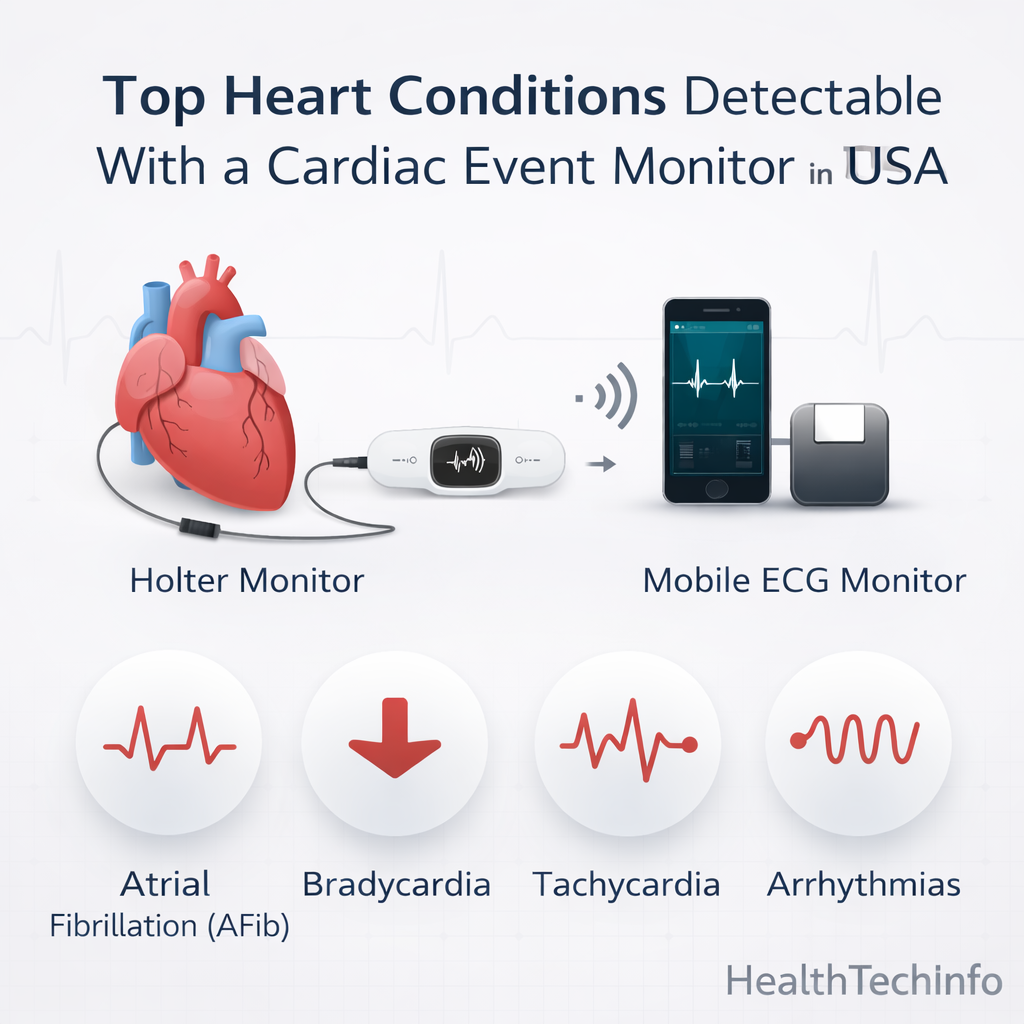
Top heart conditions detectable using these devices
-
How to choose the right monitor
-
Benefits, potential side effects, and practical tips for effective use
Understanding Cardiac Event Monitors
A cardiac event monitor is a medical device that records the electrical activity of your heart over an extended period. Unlike a standard ECG, which provides a short snapshot of your heart’s rhythm during a single visit, heart rhythm monitoring device capture intermittent arrhythmias that occur over hours, days, or even weeks. This makes them particularly valuable for detecting sporadic heart conditions that may not show up in a routine checkup.
Types of Cardiac Event Monitors
There are several types of home heart monitoring devices, each designed to address different monitoring needs:
-
Wearable Cardiac Event Monitor
Small, discreet, and often worn like a patch or chest strap, wearable monitors provide continuous tracking without interfering with daily activities. They are particularly useful for long-term monitoring at home. -
Holter Event Monitor
Designed for continuous monitoring, Holter monitors typically record heart activity for 24 to 48 hours. They are ideal for capturing frequent but short-term heart rhythm irregularities. -
7-Day Heart Monitor
Extends monitoring to an entire week, useful for detecting less frequent or unpredictable arrhythmias that a 24-hour Holter might miss. -
Mobile remote cardiac monitoring
These devices sync with smartphones or cloud platforms to provide real-time monitoring and allow physicians to review data remotely. They are highly convenient for patients who require continuous supervision without frequent clinic visits. -
ECG Event Monitor
Allows patients to manually record ECG readings during specific symptoms. These monitors are often used for symptom-activated tracking, capturing data during palpitations or other noticeable events.
Each type of monitor serves a specific purpose, whether for ongoing observation of chronic conditions or short-term detection of sporadic heart rhythm abnormalities.
How Cardiac Event Monitors Work
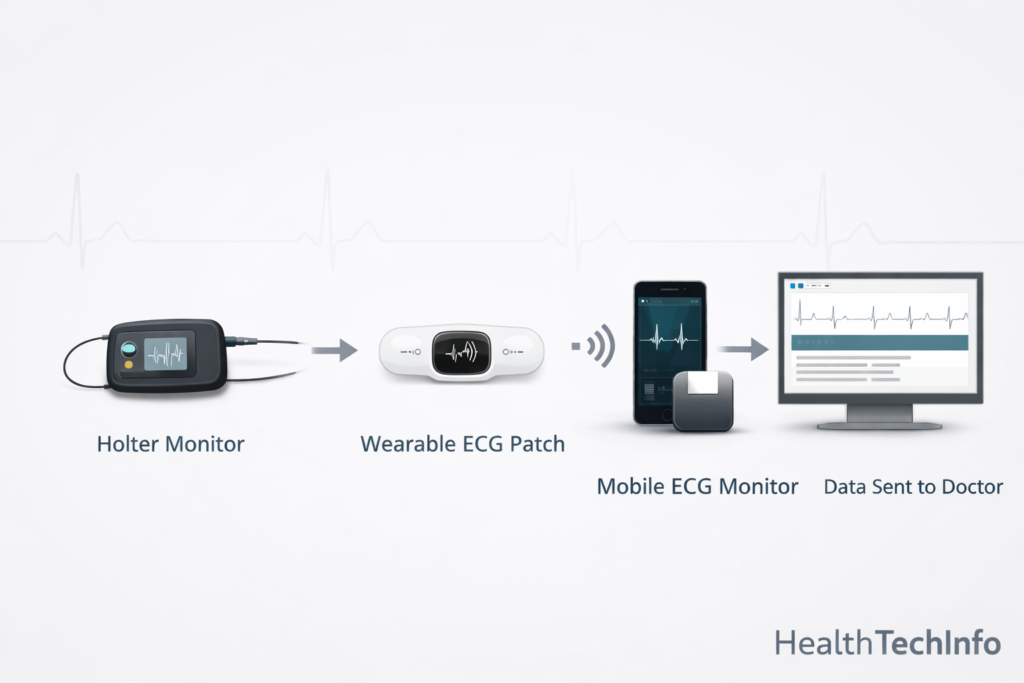
Cardiac monitors operate by detecting the electrical signals generated by your heart with remarkable precision. They track the timing and strength of each heartbeat, recording irregularities that may indicate underlying heart conditions.
Modes of Monitoring
-
Continuous Monitoring: Holter monitors and some wearable devices provide nonstop recording of heart activity. This ensures that even asymptomatic episodes are captured for review.
-
Symptom-Activated Monitoring: Some monitors allow patients to trigger recording when they experience symptoms such as palpitations, dizziness, or fainting.
-
Remote Reporting: Mobile and wearable devices often transmit data to cloud platforms, allowing cardiologists to review results in real time without requiring multiple office visits.
Using a Cardiac Event Monitor at Home
Home usage is straightforward and patient-friendly:
-
Apply the monitor as directed by your healthcare provider.
-
Wear the device consistently, following any time or placement guidelines.
-
Log symptoms in a journal or connected mobile app.
-
Share the recorded data with your cardiologist for accurate interpretation.
This method provides a reliable, detailed picture of heart activity, enabling early diagnosis and more effective treatment plans.
Top Heart Conditions Detectable With a Cardiac Event Monitor
Cardiac event monitors are capable of detecting a wide range of heart conditions, many of which might not appear on a standard ECG test. Here are the most common conditions these devices help identify:
1. Atrial Fibrillation (AFib)
AFib is one of the most common heart rhythm disorders, characterized by irregular, often rapid, atrial contractions. It increases the risk of stroke and heart failure if left untreated. A wearable ECG event monitor can capture intermittent AFib episodes that occur outside clinic visits, helping doctors provide timely interventions.
2. Bradycardia
Bradycardia is a slower-than-normal heart rate, often causing fatigue, dizziness, or fainting. Wearable or Holter monitors detect bradycardia episodes over time, allowing physicians to assess whether treatment or pacing is necessary.
3. Tachycardia
Tachycardia involves unusually fast heartbeats that can occur sporadically. Monitoring these episodes helps identify triggers and guides treatment decisions, such as medication adjustments or lifestyle modifications.
4. Premature Ventricular Contractions (PVCs)
PVCs are extra heartbeats originating from the ventricles. While often benign, frequent PVCs may indicate underlying heart disease. Event monitors capture these irregular beats, even when patients are asymptomatic.
5. Supraventricular Tachycardia (SVT)
SVT is an abnormal rhythm originating above the ventricles. Its intermittent nature makes it challenging to detect in a standard ECG, but continuous or wearable monitors can successfully capture these episodes for diagnosis.
6. Heart Block
Heart block occurs when electrical signals are delayed or blocked in the heart. Continuous monitoring can identify different types of heart block, allowing timely medical interventions, including pacemaker placement if necessary.
7. Syncope (Fainting) Episodes
Unexplained fainting may result from arrhythmias or other heart conditions. A cardiac event monitor can correlate fainting incidents with heart rhythm data, helping doctors determine the underlying cause.
8. Ventricular Tachycardia
Ventricular tachycardia involves rapid, abnormal heartbeats originating in the ventricles. This can be life-threatening, and continuous monitoring ensures early detection and immediate medical response.
9. Long QT Syndrome
A genetic condition that affects the heart’s electrical activity, Long QT Syndrome can lead to dangerous arrhythmias. Event monitors allow patients to track sporadic irregularities that may not appear during standard checkups.
10. Post-Surgical or Post-Procedure Monitoring
Following cardiac surgery or procedures such as ablation or stent placement, monitoring is critical. Wearable and mobile heart devices enable patients to safely track heart rhythms during recovery at home.
Benefits of Cardiac Event Monitoring
Using a cardiac heart monitor offers numerous advantages:
-
Early Detection: Identify irregular heart activity before serious complications develop.
-
Convenience: Monitor your heart from home without frequent hospital visits.
-
Accurate Diagnosis: Capture intermittent symptoms that might be missed by standard tests.
-
Optimized Treatment: Real-time data allows physicians to adjust medications or therapies effectively.
-
Peace of Mind: Continuous monitoring provides reassurance for patients concerned about heart irregularities.
Choosing the Right Cardiac Event Monitor
Selecting the most suitable monitor depends on your unique needs:
-
Monitoring Duration: Longer monitoring is preferred for rare or sporadic symptoms.
-
Wearability: Comfortable wearable monitors are ideal for long-term use.
-
Connectivity: Mobile monitors with cloud syncing allow for remote physician access.
-
Medical Approval: Ensure the device is FDA-approved for use in the USA.
-
Ease of Use: Devices should be user-friendly with clear instructions.
-
Cost: Affordable options exist without compromising accuracy.
Potential Side Effects
Cardiac event monitors are generally safe, but mild side effects can occur:
-
Skin irritation from electrodes
-
Minor discomfort from prolonged wear
-
Anxiety due to frequent readings
These issues are typically temporary and minimal compared to the benefits of continuous heart monitoring.
Tips for Effective Use
-
Follow the manufacturer’s instructions carefully for correct placement and usage.
-
Record symptoms in a journal or mobile app for accurate correlation with heart activity.
-
Maintain proper skin hygiene to minimize irritation.
-
Avoid removing the monitor during important monitoring periods unless directed.
-
Share recorded data regularly with your physician for precise interpretation.
Why a Cardiac Event Monitor Is Vital for Heart Health
A cardiac event monitor is an essential tool for anyone who needs to monitor heart rhythm, especially in the USA, where access to advanced wearable and mobile monitoring technology is widely available. By detecting conditions such as AFib, bradycardia, tachycardia, and other arrhythmias, these devices provide crucial insights that allow for timely medical intervention.
From wearable cardiac monitors to Holter and mobile devices, patients now have convenient, accurate, and affordable options to manage heart health at home. Regular monitoring, combined with professional guidance, ensures that irregular heart events are identified early, enhancing safety, peace of mind, and overall quality of life.
FAQ
Q1: How long do you wear a cardiac event monitor?
A: Depending on the type, wear time ranges from 24 hours to 30 days. Holter monitors usually cover 24–48 hours, while event monitors can track symptoms over several weeks.
Q2: Can cardiac event monitors be used at home?
A: Yes, many devices, including wearable and mobile ECG monitors, are designed for home use, enabling remote monitoring by physicians.
Q3: What is the difference between a Holter monitor and a cardiac event monitor?
A: Holter monitors record continuously for a short period, while ECG event monitor often record on-demand or over extended periods to capture intermittent heart issues.
Q4: Are there side effects from using a cardiac event monitor?
A: Side effects are generally mild, including minor skin irritation or discomfort. Serious risks are extremely rare.
Q5: How do I choose the right monitor?
A: Consider monitoring duration, comfort, connectivity, FDA approval, and cost. Your doctor can help determine the best option for your health needs.