Smart EKG Monitors Are Transforming Heart Care Through Mobile Apps

Heart health has always been vital, but traditional heart monitoring methods often felt outdated and inaccessible for everyday users. Now, thanks to innovation, Smart EKG Monitors are no longer heavy machines found only in hospitals. With the integration of mobile apps, monitoring heart health has become easier, faster, and more personal than ever before.

So, how exactly are smartphones and heartbeats syncing in harmony? Let’s explore.

The Evolution of Heart Monitoring Technology

Not too long ago, heart monitoring required hospital visits, extensive wires, and professional interpretation. It was a process meant mainly for those already facing severe cardiac issues. However, with the rise of mobile technology, Smart EKG Monitors have transformed dramatically, becoming compact, user-friendly, and accessible for daily use.

Why does this matter to you?

  • Instant access to heart health data without medical appointments, allowing individuals to monitor their well-being on their own schedules and avoid unnecessary visits to the doctor.
  • Comfort and privacy of home-based monitoring, enabling patients to gather crucial information in a familiar environment without feeling intimidated by clinical settings.
  • Greater involvement in personal healthcare decisions, empowering users to identify early warning signs and take preventive action faster than ever before.

Today’s patient can rely on advanced options like an ekg home monitor to track heart rhythms anytime, empowering early intervention and proactive care.

If mobility is the first breakthrough, the next is real-time smart integration. Let’s see how apps are changing the game.

Smart EKG Monitors Are Transforming Heart Care Through Mobile Apps

How Mobile Apps Are Empowering EKG Monitoring

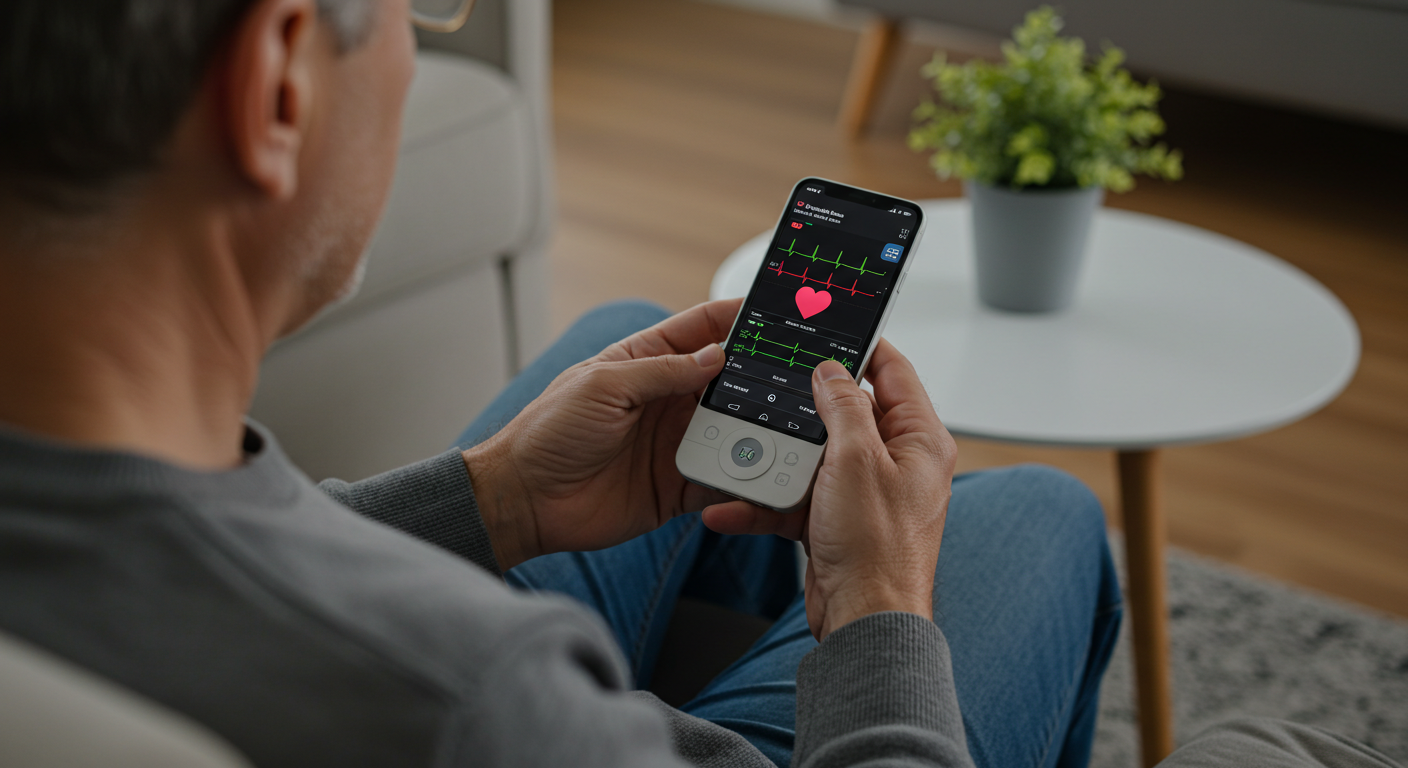
Imagine this! You feel chest discomfort, place a sensor on your chest, and your smartphone instantly tells you if it’s a simple palpitation or something serious. This is now possible with cardiac monitors synced to mobile apps. Real-time data means real-time action.

Here’s what smart apps bring to the table:

  • User-friendly graphs and personalized alerts, making it easy for anyone to understand heart health patterns without needing a medical background.
  • Secure cloud backup for historical heart data, ensuring all your records are safe, easily accessible, and ready to share with your healthcare team when needed.
  • Sharing results instantly with healthcare providers, allowing doctors to remotely monitor changes and intervene quickly if an irregularity is detected.
  • Even more impressive, tools like the ecg heart rate monitor offer users the ability to manage heart health without needing technical know-how.

Now that mobile apps bring speed, let’s look at how doctors are leveraging this new smart data too.

How Healthcare Providers Use Smart EKG Data

Gone are the days when doctors had to rely solely on intermittent patient visits to assess heart conditions. Now, EKG Monitors connected to apps give healthcare providers continuous insights without requiring patients to step into a clinic.

Here’s how it benefits medical teams:

  • Live patient monitoring for high-risk individuals, offering physicians a constant stream of important data that could reveal dangerous changes before symptoms escalate.
  • Data-driven treatment adjustments based on real-time findings, allowing doctors to make more informed decisions without waiting for follow-up appointments.
  • Faster detection of abnormal heart rhythms, helping reduce the risk of serious complications like strokes or cardiac arrests through early intervention.

By utilizing devices like portable ekg monitors, healthcare providers receive up-to-the-minute data, leading to quicker interventions and improved outcomes.

And if doctors love the remote flexibility, patients love how portable these devices have become. Let’s dive into portability next.

Smart EKG Monitors,Transformation for Heart Care Through Mobile Apps

Portability Is Reshaping Cardiac Care

Smart health technology isn’t just about connectivity; it’s also about convenience. Smart EKG Monitors have shrunk in size without compromising on performance, making them easy to carry whether you’re at home, work, or on the move.

Why portability matters for heart health:

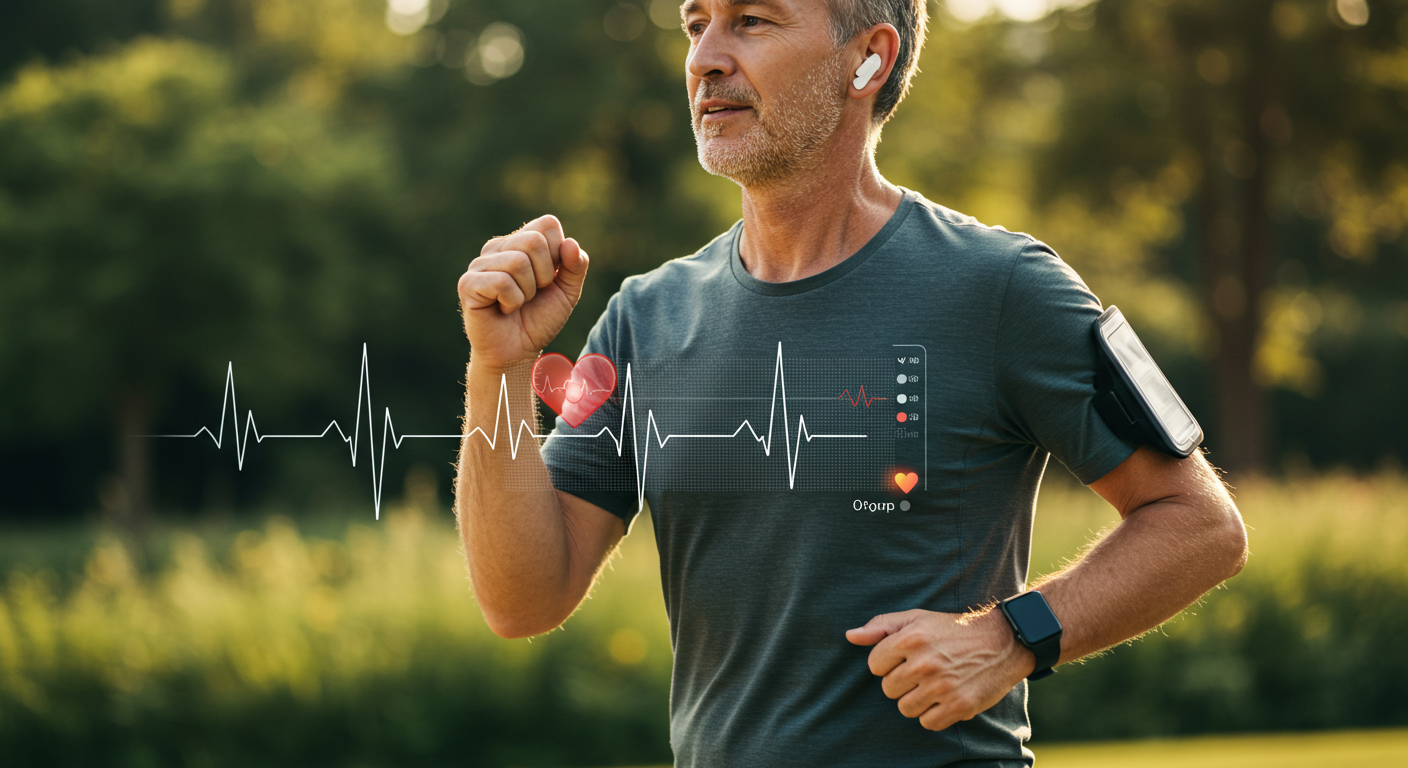
  • Stay monitored while traveling or during outdoor activities, allowing heart patients to live life fully without the fear of being unprepared in emergencies.
  • Enjoy greater independence in managing your cardiac care, freeing individuals from depending solely on clinics for simple routine monitoring.
  • Encourage routine heart check-ins, promoting a proactive health mindset rather than waiting for visible symptoms or severe discomfort.

Modern solutions like an ecg portable monitor are so compact that you can slip them into a pocket, turning everyday environments into safer spaces for heart patients.

While portability provides freedom, accuracy remains the top priority, let’s see how modern devices deliver precision.

Accuracy and Reliability in Mobile EKG Monitoring

When it comes to heart monitoring, accuracy is everything. Thankfully, today’s EKG Monitors are built with sensors and AI-powered algorithms, providing hospital-grade precision right from a smartphone app.

What ensures reliable monitoring:

  • Smart calibration technology keeps sensors accurate, ensuring that every reading reflects the true state of your heart’s electrical activity.
  • AI-driven anomaly detection, which flags irregularities in real time, guiding users to seek help when necessary without causing false alarms.
  • Regular software updates and real-time data validation, improving device intelligence and ensuring every measurement is as accurate as possible.

Devices such as a portable electrocardiogram monitor are proving that mobile heart tracking can be both convenient and clinically accurate.

Making EKG Monitoring Easier for Everyone

For heart monitoring to truly transform lives, it must be easy for anyone — young or old — to use. EKG Monitors have nailed simplicity, offering features that anyone can understand without needing medical training.

How usability has improved:

  • One-button operations for fast recording, making it accessible even for seniors or those who are unfamiliar with technology.
  • Clear mobile displays showing easy-to-read results, removing the intimidation of complex medical graphs and replacing them with friendly, understandable summaries.
  • Guided in-app tutorials and visual tips, offering step-by-step support so users can perform accurate tests confidently and without frustration.

Take, for instance, the portable ecg ekg monitor, designed specifically for non-technical users who want immediate feedback without complex interpretations.

As usability improves, we naturally see broader adoption, leading us to the real-world impact on everyday patients.

The Life-Changing Benefits for Patients

The shift to smart EKG Monitors is about giving people better control over their lives and well-being. Patients who use smart monitors report better awareness, faster action during emergencies, and overall improved confidence about their heart health.

Here are some incredible patient benefits:

  • Early detection of heart issues before serious symptoms arise, allowing individuals to take preventive actions and avoid life-threatening emergencies.
  • Motivation for positive lifestyle changes, as constant feedback encourages healthier choices like better diet, increased exercise, and stress management.
  • Lower healthcare costs due to fewer emergency visits, resulting from quicker responses to warning signs and regular self-monitoring.

By leveraging innovations like an ekg home monitor, people are no longer passive recipients of healthcare but active participants shaping their heart health journeys.

Naturally, the momentum in patient empowerment fuels new innovation. Let’s see where this is all heading next.

The Future of Smart EKG Monitoring

If the present is exciting, the future of EKG Monitors is even more promising. Imagine systems so smart they detect heart issues before symptoms arise, integrated into your fitness wearables and providing holistic, predictive healthcare solutions.

Emerging advancements to watch for:

  • Predictive analytics using AI, offering forecasts of potential heart conditions based on ongoing subtle changes that human eyes might miss.
  • Deeper integration with smartwatches and fitness trackers, ensuring seamless monitoring without users needing to wear multiple devices.
  • Ultra-personalized health guidance in real time, moving from simple tracking to actively suggesting actions based on your body’s immediate needs.

Imagine an ecg heart rate monitor that not only tracks but also advises; suggesting when to rest, move, or consult a doctor based on real-time health analytics.

Smart EKG Monitors Are Transforming Heart Care Through digital devices like mobile apps

Smart EKG Monitors combined with mobile apps are no longer optional tools, they are vital instruments for modern heart health management. They bring life-saving technology directly to the user’s pocket, creating a new era where prevention and early action are within everyone’s reach.

With greater access, improved reliability, ease of use, and powerful insights, there has never been a better time to take control of your heart health. Whether you are a patient wanting to live confidently or a healthcare provider aiming to offer superior care, smart EKG technology is the future.

Invest in a smart EKG monitor today. Take control, act early, and live healthier — because your heart deserves the smartest care available!

Why Smart Monitoring Is Redefining Everyday Heart Care

A Smart EKG Monitor does more than record a heartbeat — it interprets, stores, and shares that data instantly, turning a once-clinical process into something anyone can manage from their living room. This shift matters most for people who want ongoing awareness without scheduling a doctor’s visit every time something feels slightly off.

What sets a Smart EKG Monitor apart from older devices is the intelligence layered on top of the hardware. AI-assisted analysis now flags irregularities in seconds, giving users clear, actionable feedback instead of raw waveforms that require medical training to interpret.

How AI Improves Accuracy and Confidence

Accuracy has always been the biggest concern with home monitoring, and this is exactly where a Smart EKG Monitor has made the most progress. Algorithms trained on large datasets can now detect patterns like atrial fibrillation with a level of confidence once reserved for clinical-grade equipment.

This matters because confidence drives consistent use. When users trust their readings, they’re far more likely to check in regularly rather than second-guessing every result or ignoring the device altogether.

Choosing Between Wearables and Handheld Options

Not every Smart EKG Monitor takes the same form, and choosing the right one depends on how you plan to use it.

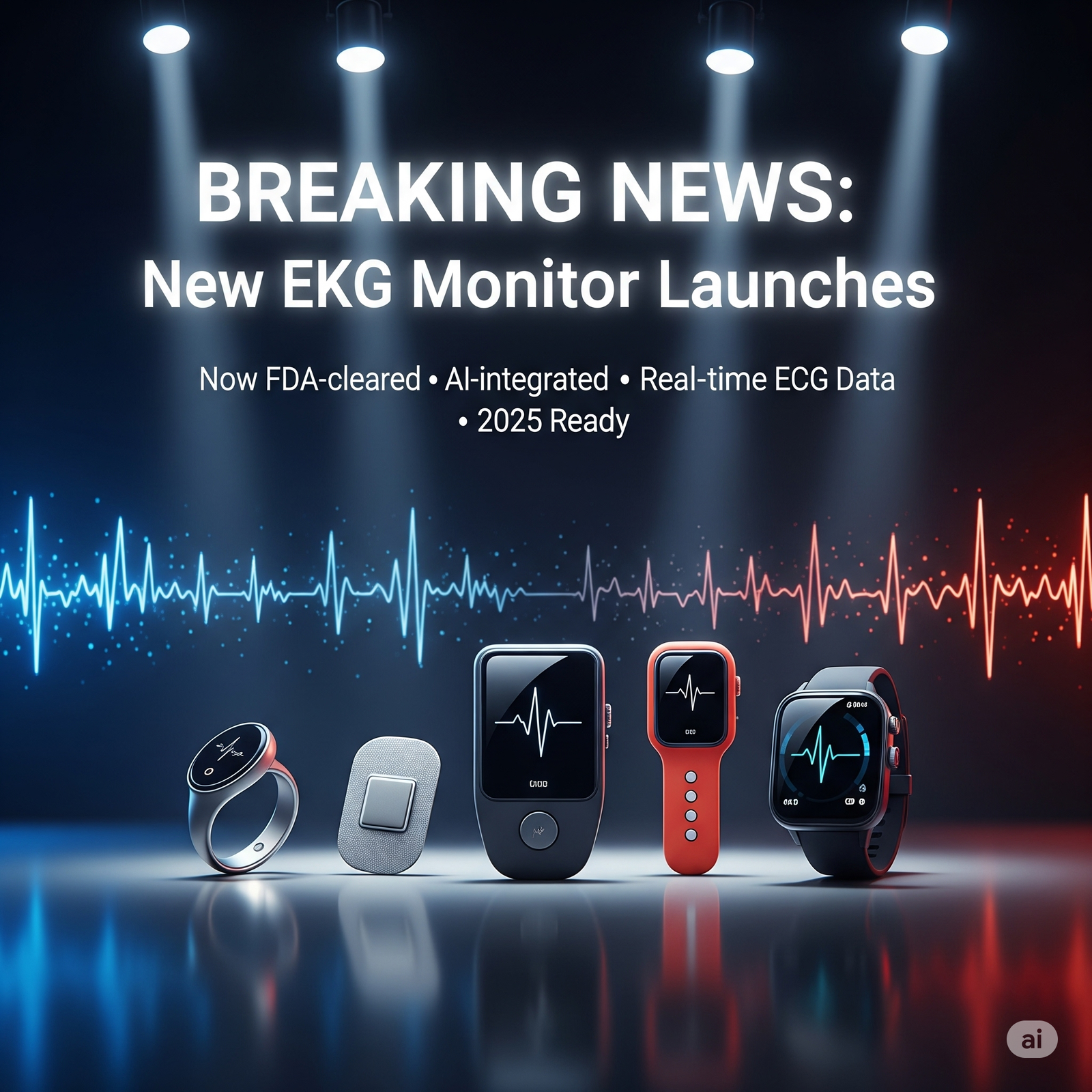
  • Wearable options, like smartwatches, offer continuous background tracking without requiring any manual action, making them ideal for passive, all-day monitoring
  • Handheld devices, including many popular portable ecg device models, are better suited for quick, intentional checks when symptoms like palpitations occur

Neither format is universally better — the right choice depends on whether you want constant background data or occasional, symptom-triggered readings.

Integrating a Smart EKG Monitor Into Daily Life

The real value of the device comes from consistent use rather than occasional curiosity. A simple, sustainable routine tends to work best:

  • Take one baseline reading each morning to establish a personal normal
  • Record additional readings immediately if symptoms arise
  • Review weekly trends instead of reacting to any single result
  • Share flagged readings with your doctor promptly rather than waiting for your next visit

This kind of routine transforms a Smart EKG Monitor from a passive gadget into a genuine part of preventive care.

Pairing Smart Monitoring With Broader Health Data

A Smart EKG Monitor works even better when paired with complementary tools like an ecg heart monitor or a dedicated home heart monitor, allowing trends in heart rhythm to be cross-referenced with sleep quality, stress, and activity levels rather than viewed in isolation.

This connected approach is especially valuable for people managing existing conditions, since correlating multiple data points often reveals triggers that a single reading alone would never surface.

What to Look for Before Buying

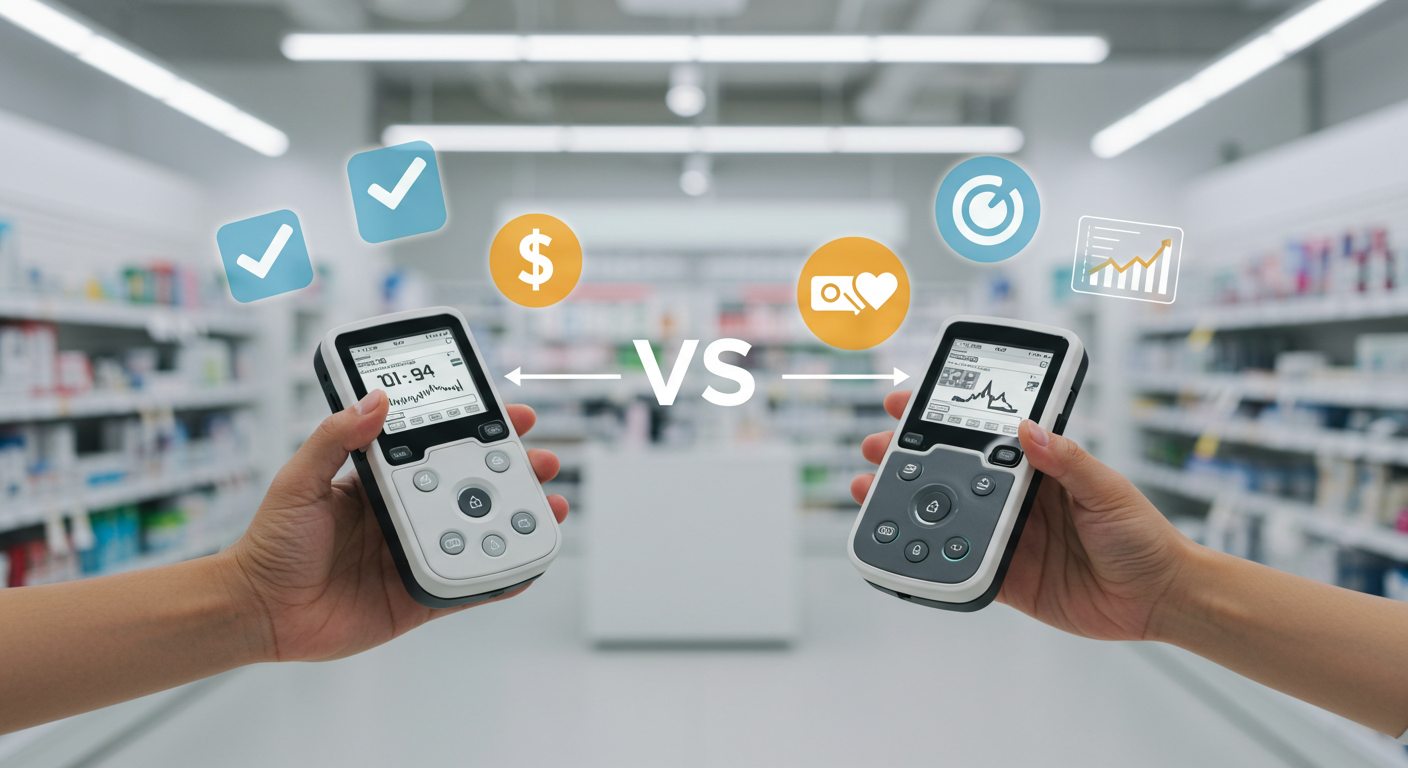
Before choosing the device, a few essentials are worth confirming: FDA clearance or equivalent regulatory approval, compatibility with your smartphone’s operating system, and whether the companion app requires an ongoing subscription. It’s also worth comparing a few leading digital EKG monitor options side by side, rather than relying on marketing claims alone, to find a device that genuinely fits your lifestyle.

Common Mistakes That Affect Reading Accuracy

Even reliable technology can produce misleading data if a few basic precautions are overlooked. Small habits during a recording can meaningfully affect signal quality:

  • Moving or talking during the reading, which introduces electrical noise
  • Taking a reading immediately after exercise, which can distort heart rate data
  • Recording with lotion or sweat on the skin, weakening electrode contact
  • Skipping sessions during “good” weeks, which skews the overall trend

Avoiding these simple pitfalls significantly improves reliability and builds confidence in the data you eventually share with your doctor.

The Bigger Picture for Everyday Users

The rise of the smart EKG monitor reflects a broader shift toward patient-driven healthcare, where individuals have direct access to the same kind of insight once reserved for clinical settings. As sensor technology and AI analysis continue to improve, these devices are increasingly viewed not as optional gadgets, but as practical extensions of everyday preventive care, supporting earlier, more informed conversations between patients and their doctors.

Frequently Asked Questions

Is there a smartwatch that does an EKG?

Yes, several major smartwatch brands now function as a Smart EKG Monitor, offering FDA-cleared ECG apps capable of detecting signs of atrial fibrillation directly from the wrist.

Can a smartphone do an EKG?

Yes, many handheld devices pair with a smartphone app to deliver a Smart EKG Monitor experience, allowing you to capture and review a reading in under a minute.

What is the most accurate home EKG device?

Accuracy generally depends on FDA clearance and lead count, with multi-lead devices offering more diagnostic detail than simpler single-lead options.

Do cardiologists recommend KardiaMobile?

Many cardiologists do recommend KardiaMobile and similar FDA-cleared devices for patients who need to track symptoms between appointments, citing their accuracy and ease of data sharing.

What smartwatch do cardiologists recommend?

Cardiologists often point to smartwatches with FDA-cleared ECG features and validated AFib detection, since regulatory clearance offers the strongest evidence of clinical reliability.

Is ECG worth it on a smartwatch?

For many users, yes — having a smart EKG monitor built into a device they already wear daily makes consistent tracking far more likely compared to a separate handheld device.

Is there a smartwatch that checks blood pressure and heart rate?

Yes, several hybrid wearables now combine blood pressure monitoring with ECG capabilities, offering a more complete cardiovascular snapshot in a single device.

Can a smartwatch detect AFib?

Yes, many FDA-cleared smartwatches include AFib detection features, using algorithm-based analysis to flag irregular rhythms for further review.

How accurate is the Apple Watch ECG?

The Apple Watch’s ECG app is FDA-cleared and generally reliable for detecting signs of atrial fibrillation, though it provides a single-lead reading rather than the more detailed data offered by dedicated multi-lead devices. Health Tech Info compares several wearable and handheld options in more detail to help match a device to specific health needs.

Leave a Reply

Your email address will not be published. Required fields are marked *