

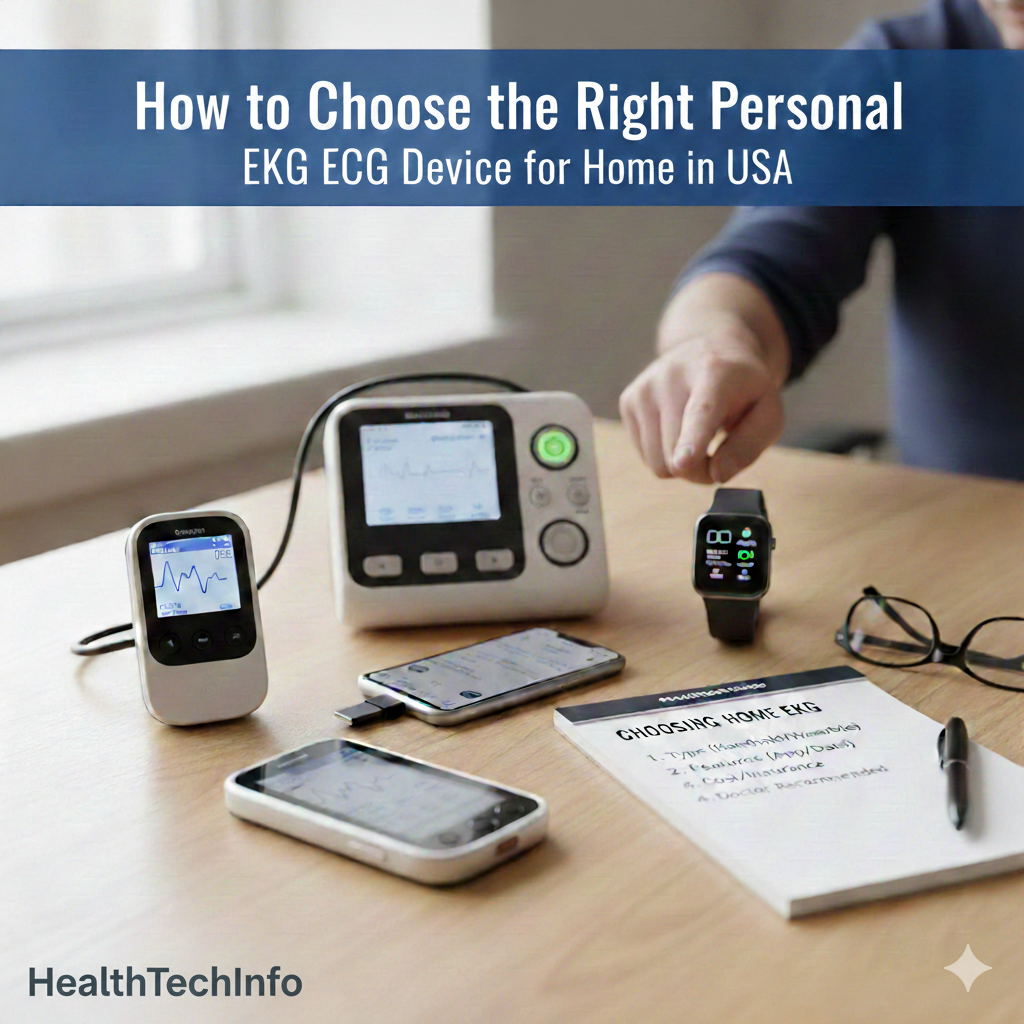
Heart health is no longer something people monitor only during annual checkups or emergency room visits. With advances in medical technology, individuals can now track their heart activity from the comfort of their homes using a personal EKG device. These compact tools are changing how people understand, manage, and respond to heart rhythm issues—making proactive cardiac care more accessible than ever.
In the United States, interest in at-home heart monitoring has grown rapidly. From seniors managing chronic conditions to younger adults seeking peace of mind, personal EKG technology has become an important part of modern preventive healthcare. This guide explores how these devices work, who they’re for, how accurate they are, and how to choose the best option for your needs.
What Is a Personal EKG Device?
A personal EKG device is a small, user-friendly medical tool designed to record the electrical activity of the heart outside of a clinical setting. Unlike traditional hospital machines, these devices are compact, portable, and designed for everyday use.
Many people refer to them interchangeably as a personal ECG device USA, since EKG and ECG mean the same thing—both describe an electrocardiogram. The terminology differs mainly by regional usage, with “EKG” being more common in American healthcare settings.
These devices allow users to capture heart rhythm readings within seconds, store the data digitally, and often share results with healthcare professionals when needed.
Why At-Home Heart Monitoring Is Gaining Popularity
The rise of the at home ekg device is closely tied to a broader shift toward patient-centered healthcare. People want more control, better insights, and faster feedback when it comes to their health.
Key reasons for growing adoption include:
-
Increased awareness of heart rhythm disorders
-
Aging population in the USA
-
Convenience compared to frequent clinic visits
-
Integration with smartphones and digital health apps
-
FDA approvals improving consumer trust
For individuals who experience occasional palpitations or unexplained symptoms, having access to a reliable heart monitor at home can reduce anxiety and improve early detection.
Types of Personal EKG Devices Available Today
Not all devices are built the same. Understanding the available formats helps you select one that fits your lifestyle.
Portable and Handheld Devices
A portable ekg device USA is designed to be lightweight and travel-friendly. These devices often fit in a pocket or bag and can be used anytime symptoms occur.
A handheld ekg monitor typically requires the user to place fingers or hands on electrodes for a short reading session. These are popular for their simplicity and quick results.
Wearable Technology
A wearable ekg device is often integrated into smart bands or patches. These are ideal for people who want passive or semi-continuous monitoring without actively starting a recording each time.
Smartphone-Connected Devices
Many modern options function as a smartphone ekg device, using mobile apps to display, store, and analyze readings. This connectivity allows users to maintain long-term heart data and share reports easily.
How a Personal EKG Device Works
EKG devices measure the electrical signals that control the heartbeat. Each heartbeat is triggered by an electrical impulse that travels through the heart muscle.
When using a mobile ekg device, electrodes detect these signals and convert them into a waveform displayed on a screen or mobile app. This waveform helps identify irregular heart rhythms, skipped beats, or patterns that may require medical attention.
Some models also offer cloud storage, automatic rhythm classification, and physician-review options.
Accuracy and Reliability: What You Need to Know
One of the most common questions people ask is: are personal ekg devices accurate?
The answer depends on the device and how it’s used. Many modern options are clinically validated and offer high accuracy for detecting common rhythm irregularities like atrial fibrillation. However, they are not meant to replace professional diagnostics.
A medical grade personal ekg device typically meets stricter performance standards and undergoes clinical testing. These devices often provide more reliable readings and clearer data for physicians to interpret.
Consistency, correct placement, and following usage instructions play a major role in accuracy.
FDA Approval and Safety Standards
In the United States, many users specifically look for an FDA approved personal ekg device. FDA clearance indicates that the device has been reviewed for safety and effectiveness for its intended use.
While FDA approval doesn’t guarantee a diagnosis, it does provide reassurance that the product meets recognized medical standards and can be safely used at home.
Comparing Personal EKG Devices and Traditional Monitoring
Personal EKG vs Holter Monitor
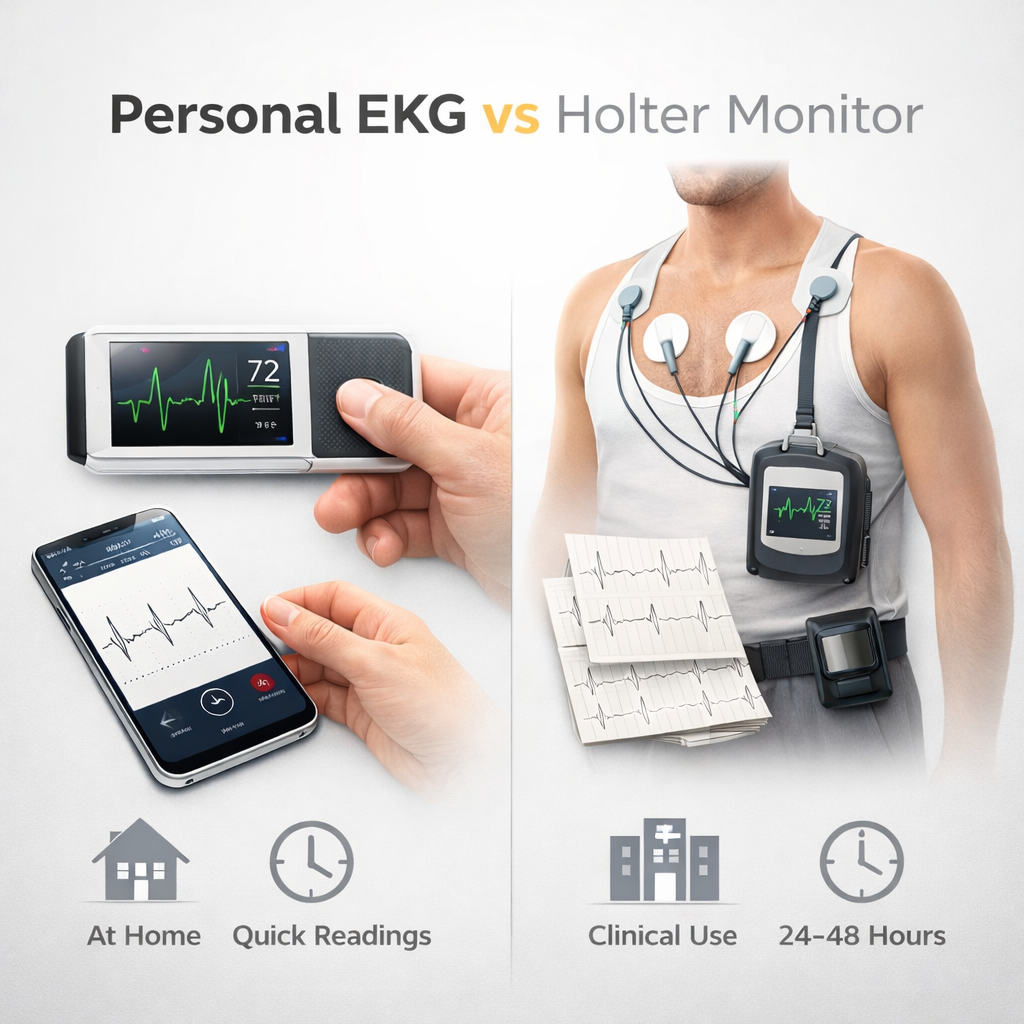
A common comparison is personal ekg vs holter monitor. Holter monitors are prescribed devices worn continuously for 24 to 48 hours (or longer) under medical supervision.
Personal EKG devices, on the other hand, allow on-demand recordings whenever symptoms appear. While they don’t capture continuous data like a Holter monitor, they are far more convenient for daily use and long-term monitoring.
EKG Machine vs Home Devices
An ekg machine used in hospitals records multiple leads and offers comprehensive diagnostics. Personal devices typically record one or two leads, which is sufficient for detecting many rhythm issues but not all heart conditions.
EKG vs ECG: Is There a Difference?
Many users wonder about the ekg vs ecg difference. In practice, there is none. Both terms describe the same test that measures the heart’s electrical activity.
“EKG” comes from the German spelling “Electrokardiogramm,” while “ECG” is the English version. In the USA, EKG is more commonly used in everyday healthcare language.
Who Can Benefit from a Personal EKG Device?
Seniors and Older Adults
A ekg monitor for seniors can be especially valuable, as the risk of heart rhythm disorders increases with age. Easy-to-use designs and clear displays make these devices accessible for older users.
People with Known Heart Conditions
Individuals diagnosed with arrhythmias or other heart conditions benefit from regular monitoring using a personal heart monitor to track changes over time.
Health-Conscious Individuals
Even people without diagnosed conditions may choose a home ekg monitor for peace of mind, fitness tracking, or early detection of irregular patterns.
Key Features to Look for When Choosing a Device
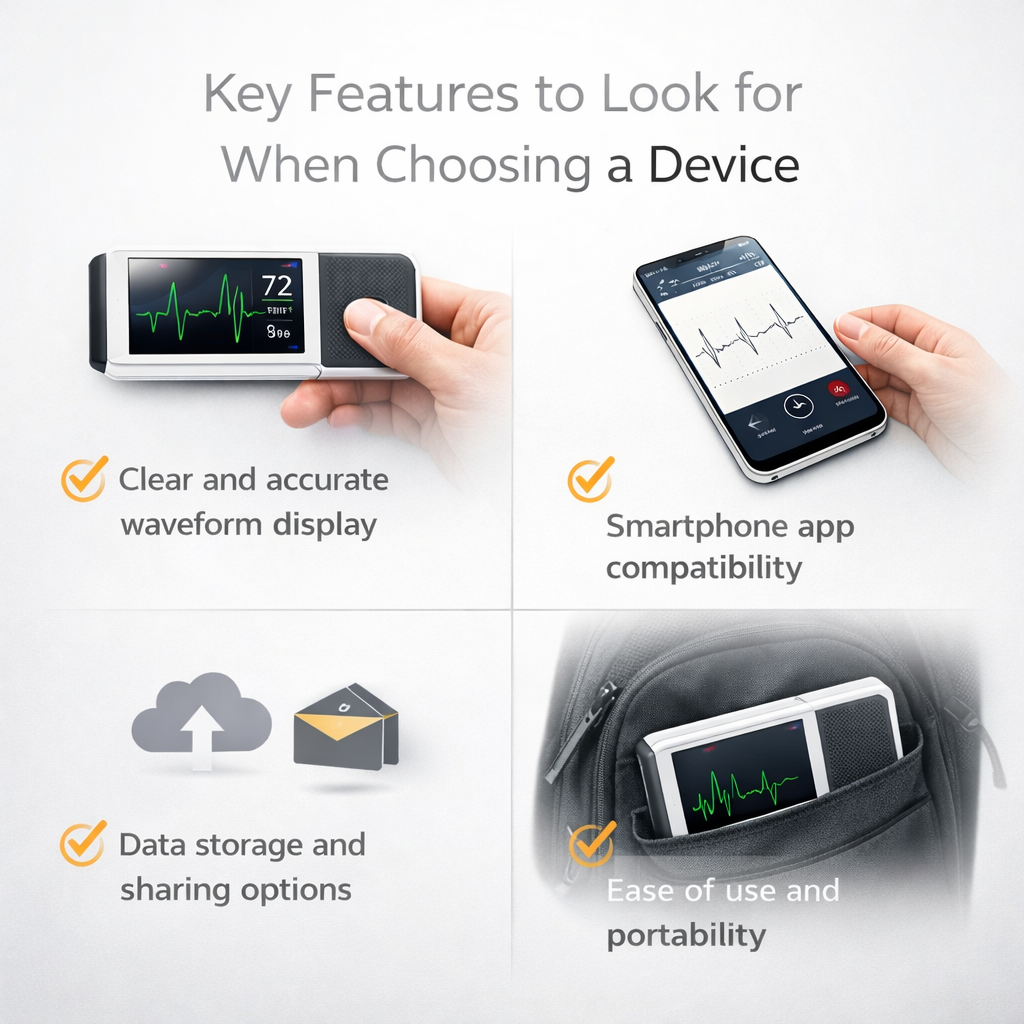
When searching for the best ekg device for home monitoring, consider the following features:
-
Clear and accurate waveform display
-
Smartphone app compatibility
-
Data storage and sharing options
-
Ease of use and portability
-
Battery life and charging method
-
Customer support and warranty
Devices marketed as a wireless ekg device offer greater flexibility by eliminating physical connections, making them easier to use on the go.
Cost and Accessibility in the USA
The cost of personal EKG devices varies widely. Some users search for an affordable ekg device, while others prioritize advanced features and medical-grade accuracy.
Prices can range from under $100 to several hundred dollars depending on capabilities. Some insurance plans may offer partial reimbursement, especially when recommended by a healthcare provider.
Consumers can also buy ekg devices online for home through trusted medical retailers and health technology platforms.
Using a Personal EKG Device at Home
A personal ekg device for home use is designed to be simple. Most devices follow these basic steps:
-
Sit calmly and relax
-
Place fingers or electrodes as instructed
-
Start the recording
-
Review the waveform and summary
-
Save or share results if needed
Consistency in usage helps create reliable trends over time, which can be valuable during medical consultations.
Data Privacy and Health Information Security
As many devices store data digitally, privacy is an important consideration. Look for platforms that encrypt health data and comply with U.S. healthcare data protection standards.
A personal ekg device USA should clearly explain how user data is stored, shared, and protected.
The Future of Personal Heart Monitoring
Personal EKG technology continues to evolve. Advancements in artificial intelligence, cloud analytics, and wearable sensors are making devices smarter and more predictive.
Future devices may offer earlier detection of conditions, deeper integration with telehealth services, and more personalised insights based on long-term data patterns.
Looking Ahead: Smarter Heart Monitoring at Home
Personal EKG monitors are transforming how people manage heart health at home. They allow individuals to track heart activity, recognise irregular patterns early, and stay informed without relying solely on clinic visits.
As technology continues to advance, these tools are becoming more accurate and easier to use. Resources like HealthTechInfo help users understand available options and choose reliable at-home heart monitoring solutions with confidence.
With the right personal EKG monitors and consistent use, people across the USA can take a more active role in preventive care and maintain better long-term heart health.
Frequently Asked Questions (FAQ)
1. Can a personal EKG device replace doctor visits?
No. These devices are meant to support monitoring, not replace professional medical evaluation or diagnosis.
2. How often should I use a personal EKG device?
Usage depends on individual needs. Some users record only when symptoms occur, while others track daily or weekly.
3. Are personal EKG devices difficult to use?
Most are designed for everyday users and require minimal training. Clear instructions and app guidance make them accessible.
4. Is a personal EKG device safe for daily use?
Yes, FDA-cleared devices are safe for regular use when used as directed.
5. Can results be shared with doctors?
Many modern devices allow users to export or share readings digitally with healthcare providers.