

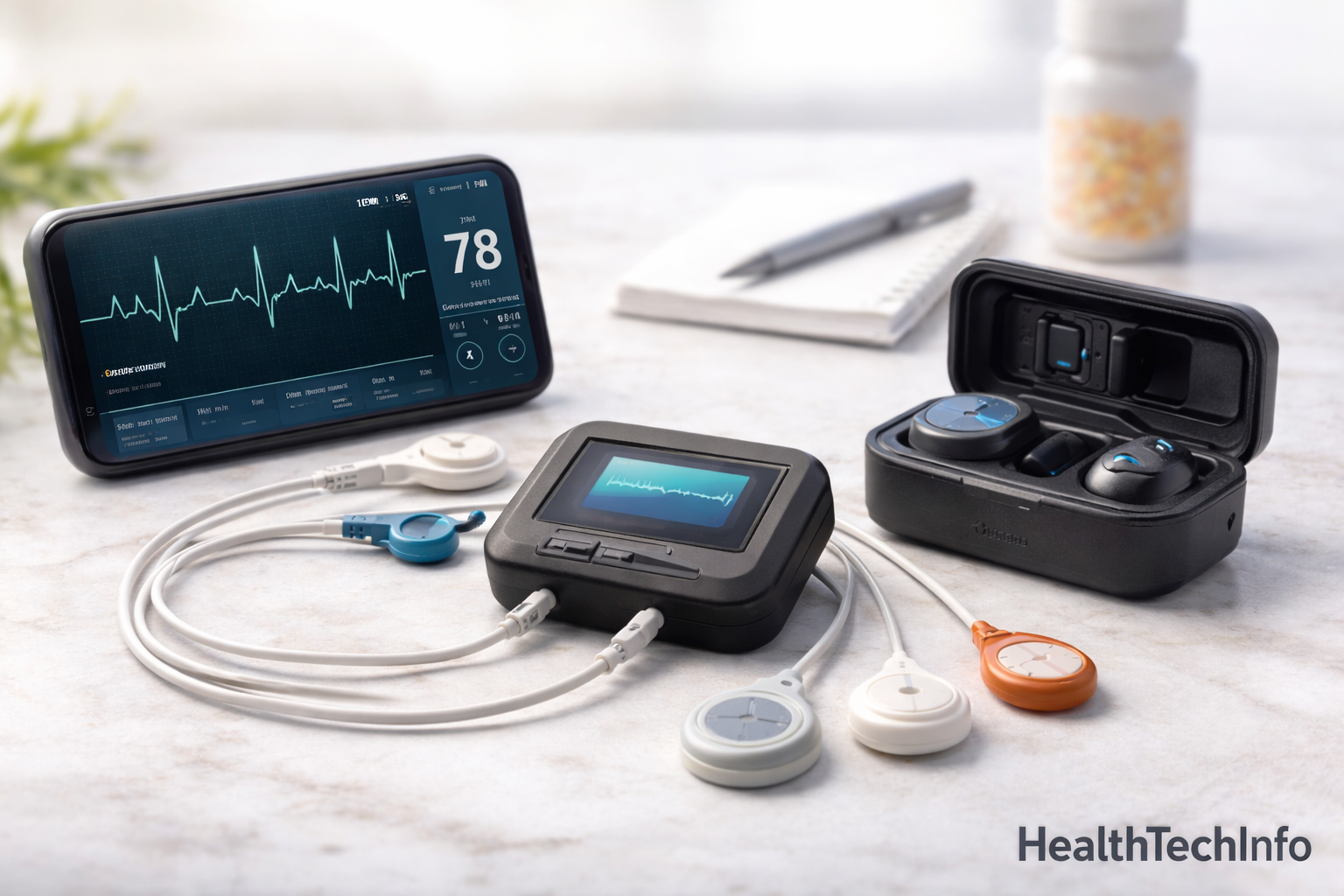
Heart health has become a top priority for millions of Americans, especially as cardiovascular conditions continue to rise across all age groups. With advancements in medical technology, monitoring heart rhythm no longer requires long hospital stays or bulky equipment. One of the most significant innovations in this space is the portable Holter monitor, a compact and patient-friendly solution that allows continuous heart monitoring from the comfort of home.
This guide explores how modern Holter technology works, who it benefits, and why portable cardiac monitoring has become a trusted diagnostic tool across the United States.
Understanding Holter Monitoring in Simple Terms
A Holter monitor is a medical device used to continuously record the electrical activity of the heart, typically through electrocardiogram (ECG) signals. Unlike a standard ECG that captures only a few seconds of heart activity, Holter monitoring records data over extended periods—ranging from 24 hours to several days—allowing physicians to detect irregularities that occur intermittently.
Traditional Holter systems were effective but often inconvenient. Today’s Holter monitor portable device solutions are lighter, easier to wear, and designed with patient comfort in mind.
Why Portable Holter Monitoring Is Gaining Popularity in the US
Healthcare in the US is shifting toward patient-centered and remote monitoring solutions. Portable heart monitoring devices align perfectly with this trend, offering flexibility without compromising diagnostic accuracy.
Key reasons for widespread adoption include:
-
Rising prevalence of arrhythmias and heart rhythm disorders
-
Increased demand for at-home diagnostic solutions
-
FDA-regulated advancements in wearable medical technology
-
Improved patient compliance due to comfort and ease of use
A mobile Holter monitor allows patients to go about their daily routines while their heart activity is continuously tracked, providing more realistic and clinically valuable data.
How a Portable Holter Monitor Works
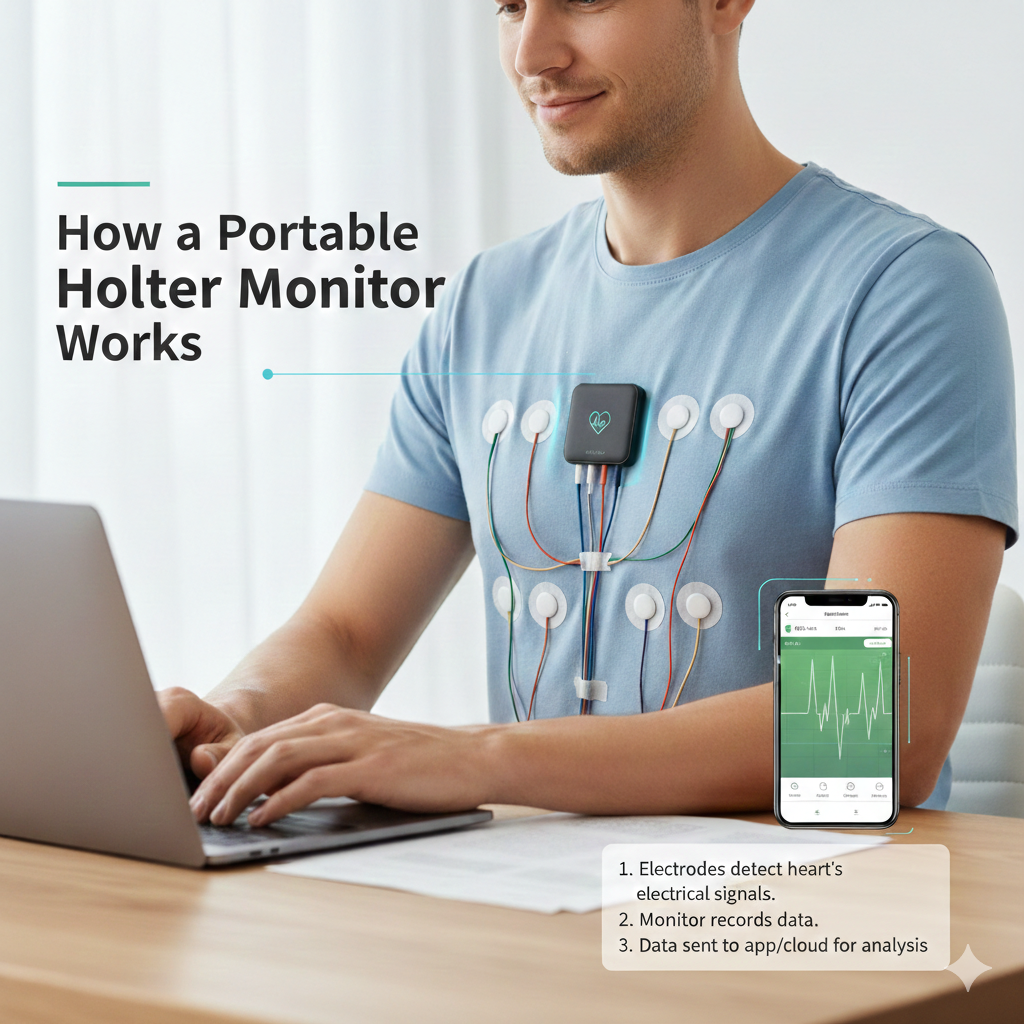
A portable Holter system typically consists of:
-
Small electrodes placed on the chest
-
A lightweight recording unit
-
Digital storage or wireless data transmission
Once attached, the device records every heartbeat during the monitoring period. Physicians later analyze the data to identify abnormalities such as atrial fibrillation, bradycardia, or tachycardia.
Modern devices often function as a wireless Holter monitor, enabling seamless data transfer to healthcare providers without manual downloads.
Key Benefits for Patients
Comfort and Convenience
A wearable Holter monitor is designed to be discreet and lightweight, making it easier to wear for extended periods.
Continuous Monitoring
Unlike in-clinic ECGs, a portable heart rhythm monitor captures data during normal daily activities, increasing diagnostic accuracy.
At-Home Use
Many patients prefer an at-home heart monitoring device that eliminates repeated hospital visits.
Faster Diagnosis
Longer monitoring durations help doctors detect irregular heart events that might otherwise go unnoticed.
Who Should Use a Portable Holter Monitor?
Doctors across the US commonly recommend portable Holter monitoring for patients who experience:
-
Unexplained dizziness or fainting
-
Palpitations or irregular heartbeat sensations
-
Suspected arrhythmias
-
Post-cardiac procedure monitoring
-
Medication effectiveness evaluation
For individuals experiencing sporadic symptoms, a portable heart monitor for patients provides invaluable insight into heart behaviour over time.
FDA Clearance and Safety Standards in the United States
In the US, cardiac monitoring devices must meet strict regulatory requirements. A US FDA cleared Holter monitor ensures that the device has passed rigorous evaluations for safety, accuracy, and reliability.
Patients should always confirm that their monitoring device is FDA-cleared, especially when using newer digital or wireless systems.
Digital Innovation in Cardiac Monitoring
Technology has significantly transformed how cardiac data is collected and analyzed. A digital Holter monitor offers high-resolution ECG recordings, automated arrhythmia detection, and cloud-based data storage.
These innovations help cardiologists make faster, more informed decisions while reducing diagnostic delays.
Extended Monitoring: Beyond 24 Hours
Some heart rhythm issues occur infrequently. For such cases, doctors may recommend a 7-day Holter monitor portable solution that extends monitoring duration without adding discomfort.
Extended monitoring increases the likelihood of capturing rare cardiac events, improving diagnostic confidence and treatment planning.
Holter vs. Cardiac Event Monitoring
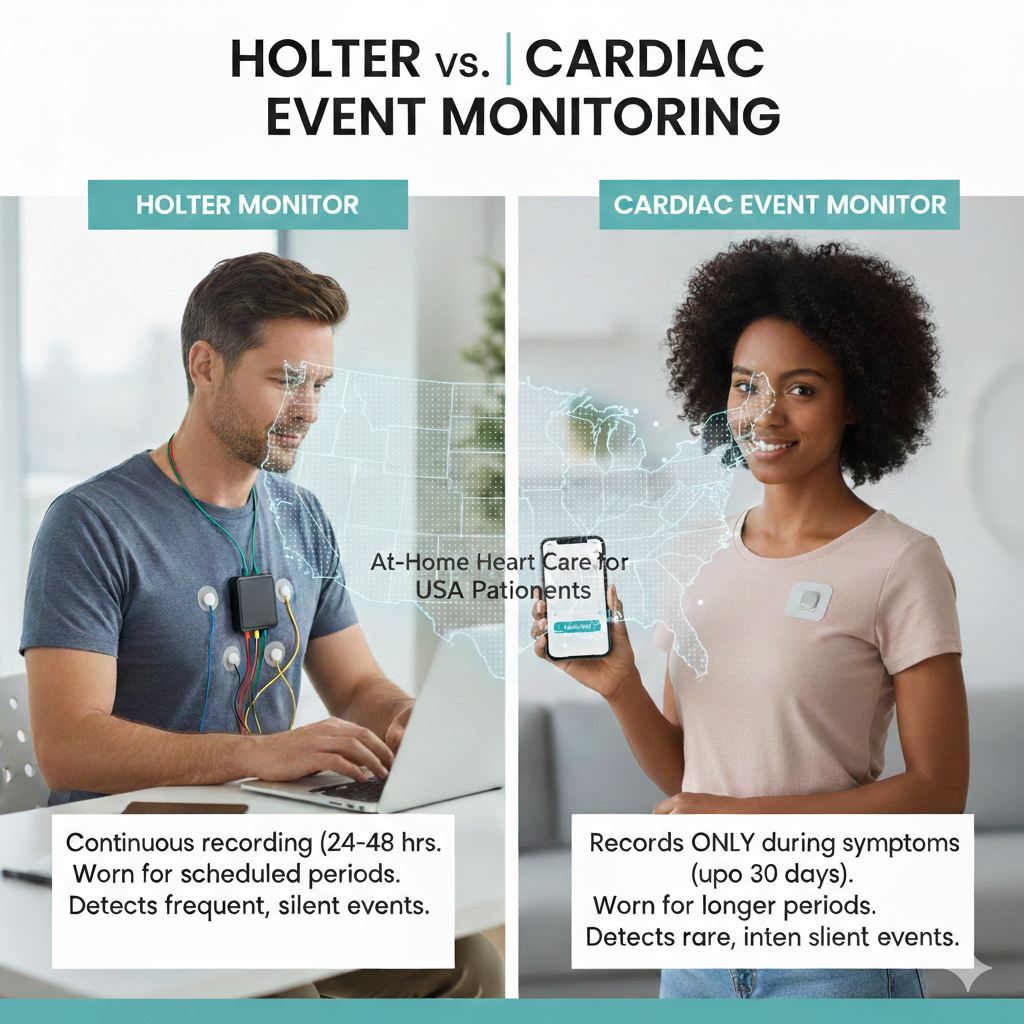
While both devices monitor heart activity, they serve slightly different purposes. A portable cardiac event monitor is typically activated by the patient when symptoms occur, whereas a Holter monitor records continuously.
Doctors choose the appropriate device based on symptom frequency and clinical suspicion.
Compact and Discreet Design Matters
Today’s devices prioritize patient lifestyle. A compact Holter monitor fits easily under clothing and allows patients to sleep, work, and exercise with minimal disruption.
This design improvement has played a significant role in increased patient compliance across US healthcare systems.
Role in Diagnosing Irregular Heartbeats
For patients experiencing unexplained symptoms, an ECG monitor for irregular heartbeat provides critical diagnostic clarity. Continuous ECG data helps physicians correlate symptoms with actual heart rhythm changes.
This is especially useful in diagnosing conditions like atrial fibrillation, which may not appear during short clinical tests.
Use in US Hospitals and Remote Care Programs
Hospitals and clinics nationwide are integrating portable cardiac technology into remote care models. These cardiac monitoring devices in the US support telehealth initiatives, reduce hospital readmissions, and improve long-term patient outcomes.
Many healthcare providers now offer monitoring programs that allow patients to receive devices by mail and return them after use.
Wearable Heart Monitoring Across America
The rise of wearable health tech has made wearable heart monitor USA solutions more accessible than ever. While consumer wearables provide basic insights, medical-grade Holter systems deliver clinical accuracy required for diagnosis and treatment.
Choosing the Right Portable Holter Monitor
When selecting a device, consider:
-
FDA clearance
-
Monitoring duration options
-
Data accuracy and reporting
-
Physician compatibility
-
Patient comfort
A reliable portable cardiac monitor device should balance advanced technology with ease of use.
Why Location Matters: USA-Based Cardiac Monitoring
Using a portable Holter monitor USA ensures compliance with local medical regulations, insurance standards, and clinical practices. US-based providers also offer better support, faster data processing, and integration with domestic healthcare systems.
Future of Portable Cardiac Monitoring
The future of cardiac diagnostics lies in miniaturisation, AI-driven analysis, and real-time alerts. As technology evolves, portable monitoring will continue to reduce healthcare costs while improving early detection of heart conditions.
Final Thoughts
A portable Holter monitor combines medical precision with patient convenience, allowing continuous, real-world heart monitoring without disrupting daily life. These devices have transformed how cardiac conditions are diagnosed and managed across the United States, giving patients and healthcare providers more accurate and actionable insights than ever before.
At HealthTechInfo, we showcase how portable Holter technology offers a smarter, more flexible approach to heart health. By providing reliable, FDA-cleared monitoring at home, these devices ensure both comfort and safety—helping patients stay informed while supporting doctors in delivering the best possible care.
Frequently Asked Questions (FAQ)
What is a portable Holter monitor used for?
A portable Holter monitor is a small, wearable device that continuously records the heart’s electrical activity over an extended period—usually 24 hours to a week. It helps detect irregular heart rhythms, palpitations, or other cardiac abnormalities that might not appear during a standard in-clinic ECG.
Is Holter monitoring safe for home use?
Yes. FDA-cleared portable Holter monitors are safe, non-invasive, and designed for everyday use. Patients can wear them at home while performing normal activities, making it easier for doctors to capture accurate, real-world heart data.
How long do patients typically wear a Holter monitor?
The duration depends on the doctor’s recommendation and the type of symptoms being monitored. Most patients wear a Holter monitor for 24 to 48 hours, but in some cases, extended monitoring of up to 7 days may be required to capture intermittent heart rhythm issues.
Can I shower while wearing a Holter monitor?
Some portable Holter monitors are water-resistant, but most are not fully waterproof. Patients should follow the specific instructions provided by their healthcare provider to avoid damaging the device or compromising the quality of the heart recordings.
Do I need a prescription for a Holter monitor?
Yes. A portable Holter monitor is a medical diagnostic tool, and it must be prescribed by a licensed healthcare professional. Your doctor will determine the appropriate monitoring period and provide guidance on how to use the device correctly.